

Nov 24, 2026
How to Read a Texas Electricity Facts Label
Read a Texas Electricity Facts Label line by line: the three average prices, the charges under them, the contract terms, and what the label leaves out.
An Electricity Facts Label, or EFL, is the one- or two-page sheet that tells you what a Texas electricity plan costs and what you're agreeing to. Skip the big average price at the top. Read the charges underneath it, then the length, the exit fee, and whether the price can change.
Looking for more guidance? Take a look at our Finances overview.
Every competitive residential plan has one, and state rules say a company has to show it on its website without asking for anything beyond your ZIP code and the kind of plan you want. If you can't find a label, move on to another plan.
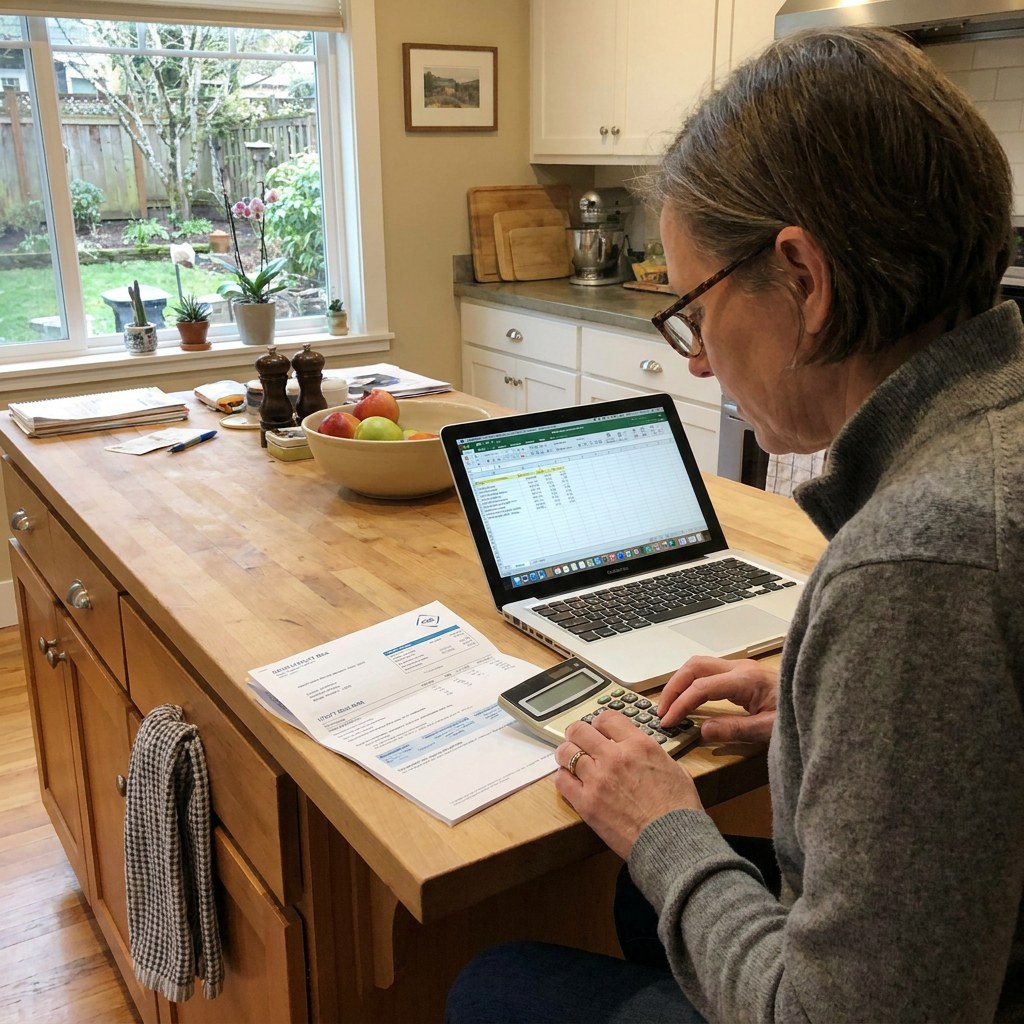
A Sample Label, Line by Line
These numbers are invented, with Oncor's delivery charges as of November 1, 2026.
| What the label says | What it means for you |
|---|---|
| Average monthly use: 500 / 1,000 / 2,000 kWh | Three test homes. Yours is none of them |
| Average price: 23.9¢ / 11.0¢ / 17.0¢ | Everything recurring, divided by use. The dip in the middle is the clue |
| Energy charge: 16.2¢ per kWh | What the company charges for power |
| Usage credit: $125 at 1,000 kWh or more | Money off, but only in months that reach it |
| Delivery: $4.06 a month and 6.8673¢ per kWh | What the wires company charges, passed along |
| Type of product: fixed rate | The company can't raise its own price during the term |
| Contract term: 12 months | Mark the end date now |
| Termination fee: $150 | What leaving early costs |
How the Average Price Is Made
The label has to give the average price at 500, 1,000, and 2,000 kWh, with every recurring charge in it. Here is the sample label worked out.
| 500 kWh | 1,000 kWh | 2,000 kWh | |
|---|---|---|---|
| Energy | $81.00 | $162.00 | $324.00 |
| Delivery | $38.40 | $72.73 | $141.41 |
| Credit | None | -$125.00 | -$125.00 |
| Month's cost | $119.40 | $109.73 | $340.41 |
| Average price | 23.9¢ | 11.0¢ | 17.0¢ |
The 11.0¢ price is real for a home that uses exactly 1,000 kWh. At 950 kWh the same plan costs $223.20, which is 23.5¢. That's why the averages can't be your guide.
A quick test: if the three averages drift down slowly, the plan is simple. If one of them drops sharply, look for a credit or a tier. If the 500 kWh price is far above the others, look for a base charge or a minimum-use fee.
The Charges Underneath
Use these to price your own months.
- Energy charge. One price, or several. A tiered plan changes price after a set number of kWh.
- Base charge. A flat amount each month. Some plans waive it above a level of use.
- Minimum-use charge. A fee in months you use too little. Power to Choose says typical cutoffs are 500 or 1,000 kWh.
- Credits. Check the start, and whether there's an upper limit too.
- Delivery. Either listed on its own lines or folded into the energy charge. Don't add it twice.
Put them into our plan calculator with 12 months of your use. It shows the yearly cost and also works out the label's three averages, so you can tell whether you typed everything in.
The Disclosure Chart
This is the question-and-answer part of the label.
Type of product. It has to say fixed or variable. A fixed price can still move for actual delivery charges, certain grid fees, and new laws. A variable price can change every month at the company's discretion. Here's how to choose.
Contract term. Months, not a date. Once service starts, the company must be able to give you the end date, either as a calendar date or as the first meter reading after one.
Termination fee. Look for "per month remaining." A fee of $20 a month is $200 with ten months left. No fee applies in the last 14 days before the end date, or when you move and give a forwarding address.
Other fees. Late payment, disconnection, paper bills, payment by phone. The label has to list fees and say whether each is in the average price.
Prepaid. A yes here means you pay before you use it.
Excess renewable generation. Matters if you have solar panels and want to sell back.
Renewable content. The plan's share next to the statewide share.
What the Label Leaves Out
- Taxes. State and local sales taxes and the reimbursement for the gross receipts tax aren't in the average price.
- Area charges. A special charge that applies only in part of the delivery area, such as for underground service, gets a note rather than a number.
- Your use. Including when you use it. On time-of-use plans, the average rests on the company's own guess about how much you'll use in the cheap hours, and the Public Utility Commission says those estimates vary by company and plan.
- The rest of the contract. That's in two other documents, the Terms of Service and Your Rights as a Customer. Read the Terms of Service for renewal terms, payment rules, and deposits.
Read One in Five Minutes
- Scan the three averages. Smooth or jumpy?
- Write down the charges underneath. Energy, base, credit and its threshold, minimum use, delivery.
- Check fixed or variable, the term, and the exit fee.
- Price your 12 months.
- Check the date and version. Labels change. The one you sign is the one that counts, so save a copy.
Where Casa Helps
Casa can read your bill and your current label, compare plans against your use, and show the yearly cost and the label for each one. You pick the plan and sign up with that provider. Checking is free.
Questions People Ask
Is a lower average price at 1,000 kWh better? Only if you use about 1,000 kWh nearly every month. Compare yearly cost instead.
Why did my price go up on a fixed plan? Usually delivery. Companies can pass along actual changes in delivery charges. A change in your use also moves your average, especially with a credit.
What is a TDU or TDSP? The company that owns the wires and reads the meter. You can't choose it, and it's the one to call about an outage.
Where is the label after I sign up? Ask the company for the version you enrolled in, and keep it with your home records.