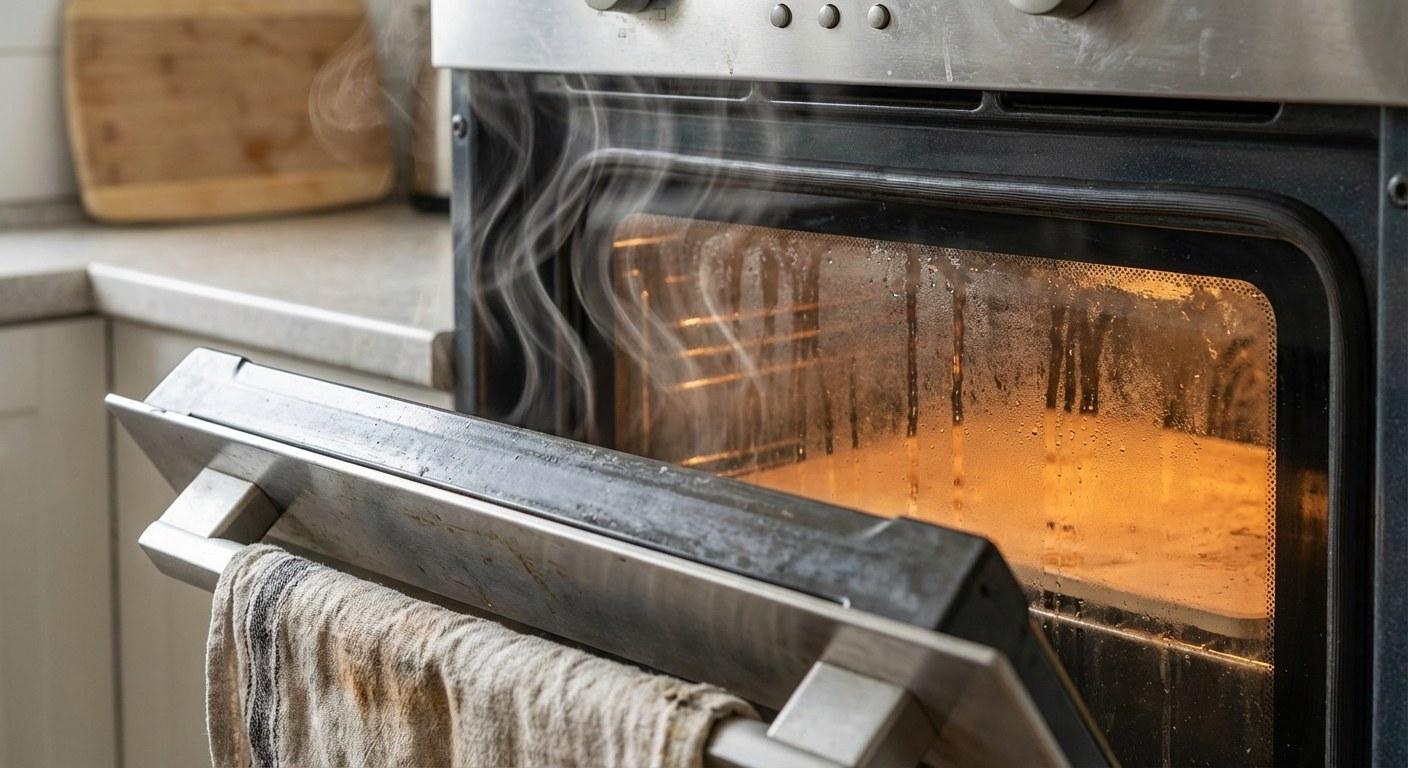
The good news is that a loose oven door rarely means you need a new stove. In fact, it often doesn't even require a repair technician. The issue is usually caused by simple wear and tear—like built-up grease, a shifted gasket, or loose hinge screws—that you can resolve yourself in under 30 minutes.
This guide will walk you through a simple inspection process to help you get that door sealed tight again so you can get back to cooking with confidence.
What Usually Causes an Oven Door to Stick?
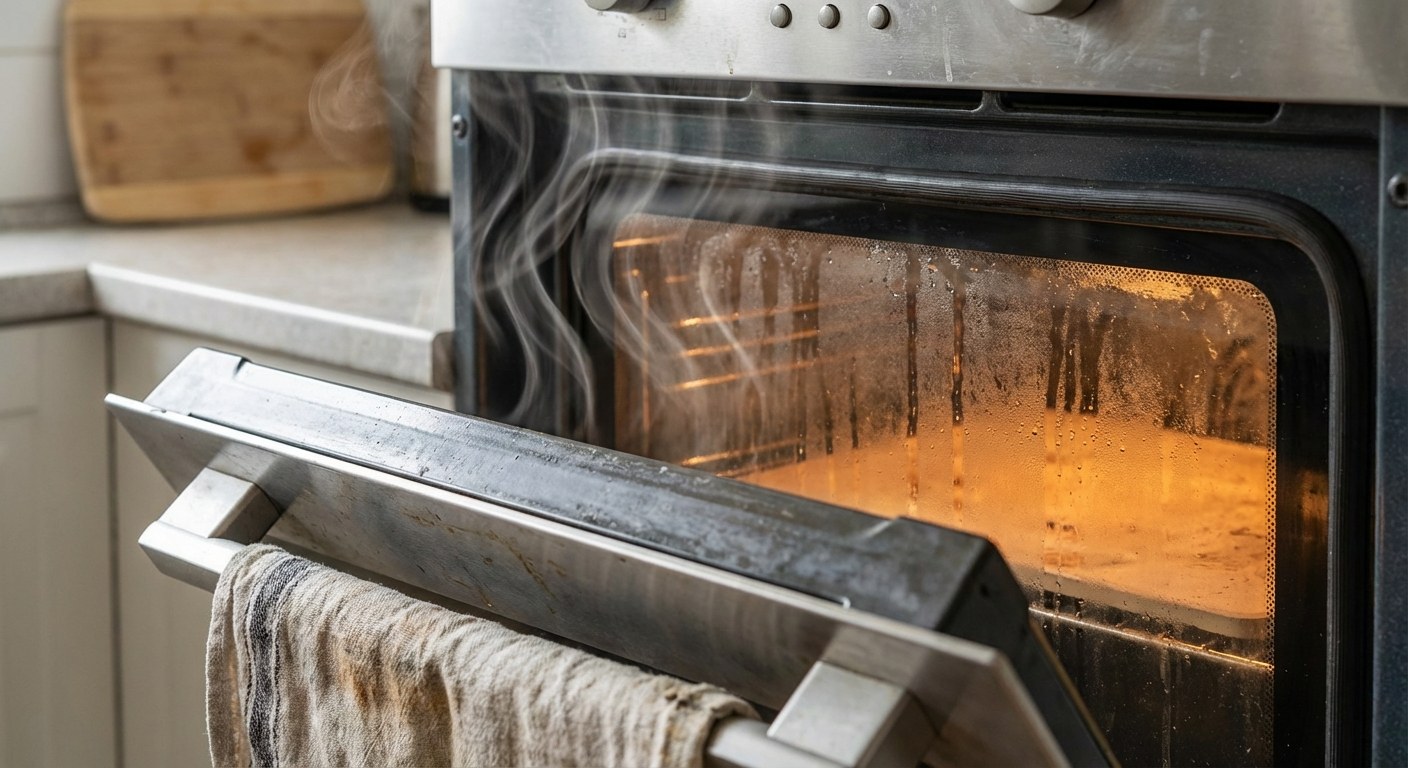
Before grabbing your toolbox, it helps to understand why this happens. Oven doors are heavy, and they move on hinges that are under constant tension. Over time, three things typically happen:
- Debris Buildup: Years of cooking leads to crumbs and grease hardening on the frame or hinges, physically blocking the door from closing flush.
- Gasket Issues: The rubber-like seal (gasket) around the door can get loose, twisted, or coated in grime, preventing a suction-like seal.
- Loose Hardware: The heavy weight of the door can gradually loosen the screws holding the hinges in place, causing the door to sag or wobble.
Let's check these one by one.
Step-by-Step Diagnosis and Repair
Step 1: The Visual Inspection
First, let's see exactly where the problem is. Safety first: make sure the oven is switched off and has been cool for at least 30 minutes.
- Use the flashlight trick. Place a lit flashlight inside the oven cavity and close the door as much as it will go.
- Look for light leaks. Turn off the kitchen lights. Look around the edges of the door. If you see light shining through, that’s exactly where your heat is escaping.
- Check the hang. Step back and look at the door. Does it look crooked? Does one side hang lower than the other? This usually points to a hinge issue.
Step 2: Check for Debris and Grease
It sounds too simple to be true, but baked-on grease is a very common culprit. If hard grime builds up on the door frame or the bottom lip of the oven door, it acts like a doorstop.
The Fix:
- Mix warm water with a drop of dish soap.
- Dip a small brush (an old toothbrush works great) into the mixture.
- Scrub the door frame, the mating surfaces, and the hinges. Pay special attention to the bottom edge where crumbs collect.
- Wipe everything down with a microfiber cloth and dry it with paper towels.
Try closing the door. If it shuts with a solid "thud" and sits flush, you’re done! If not, move to the gasket.
Step 3: Service the Door Gasket
The gasket is the strip of material (often braided fiberglass or rubber) that lines the opening of the oven. If it comes loose or gets twisted, the door will bounce back open.
The Fix:
- Open the door fully so you can see the entire gasket.
- Feel for loose spots. Run your fingers along the gasket. Is it coming out of its channel? Is a section twisted?
- Reseat the seal. If you find loose sections, firmly press them back into the channel or small holes that hold them.
- Clean the gasket. Gently wipe the gasket with a damp, soapy cloth. Grease on the gasket can make it sticky or slippery, preventing a good seal.
Note: If the gasket is torn, brittle, or missing chunks, cleaning won’t help—you will need to buy a replacement part.
Step 4: Tighten the Hinges
If the door is clean and the gasket is fine, but the door feels "wobbly" or hangs unevenly, the hinges likely need tightening.
The Fix:
- Open the oven door partially (about 4 inches).
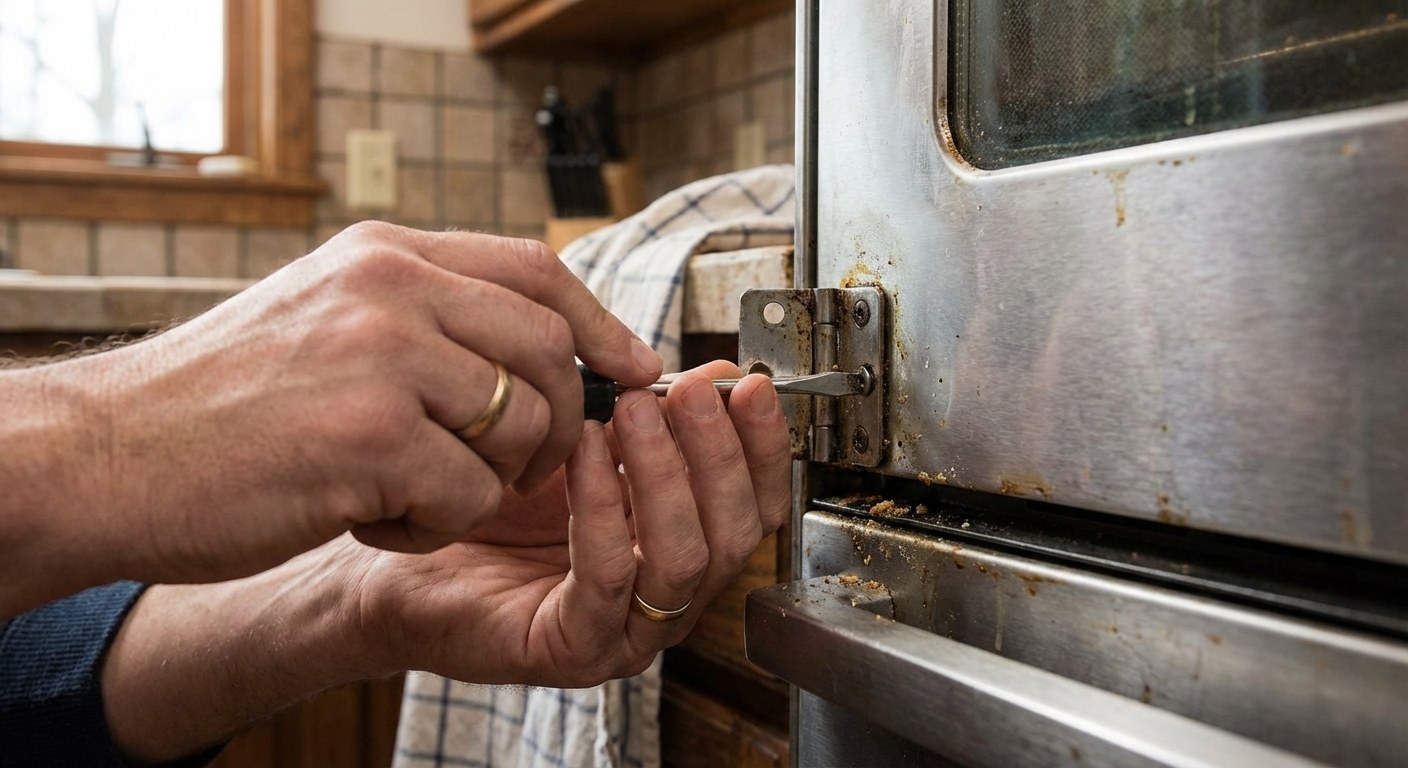
- Locate the hinges. These are the metal arms connecting the door to the frame.
- Look for the screws attaching the hinge to the oven frame.
- Using a Phillips screwdriver, turn the screws clockwise. You want them "snug," but don't over-tighten them with all your strength, as you could strip the threads.
- Close the door and check the alignment. The top edge of the door should be parallel with the control panel.
When to Call a Professional
If you have cleaned the frame, reseated the gasket, and tightened the screws, but the door still won't close, you may have a mechanical failure.
It is time to call a pro if:
- The door springs feel "dead" (the door flops open and won't stay up).
- The hinges are physically bent or broken.
- The door latch (for self-cleaning cycles) is stuck in the locked position.
Typical Repair Costs:
- DIY: $0 if it’s just cleaning/tightening. $20–$50 if you need to buy a new gasket.
- Professional Repair: $150–$300 depending on parts (hinges or springs) and labor.
Keeping It Fixed
Once you get that door sealed, a little maintenance goes a long way. Keeping the door frame clean of crumbs and grease is the easiest way to prevent this from happening again. It’s a small habit that protects your appliance.
For help tracking these small maintenance tasks—like reminding you to deep clean the oven seal once a year—download the Casa app. Casa helps you stay organized so small problems don't turn into expensive repairs, keeping your home running smoothly.