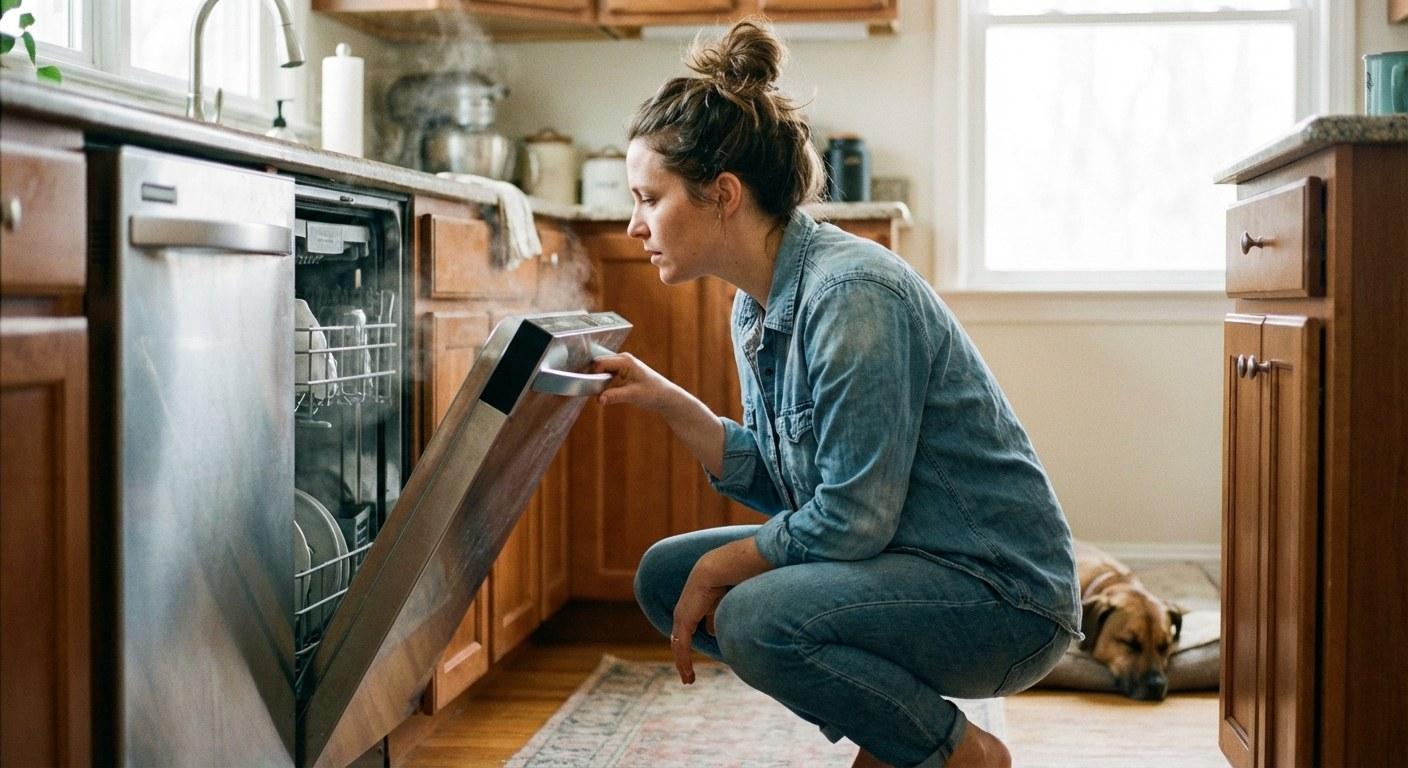
The issue usually isn't that the dishwasher is broken, but that something is physically preventing the door from latching or sealing correctly. This guide will walk you through the most common causes, starting with the easiest fixes, so you can diagnose the problem and get your dishwasher back to work.
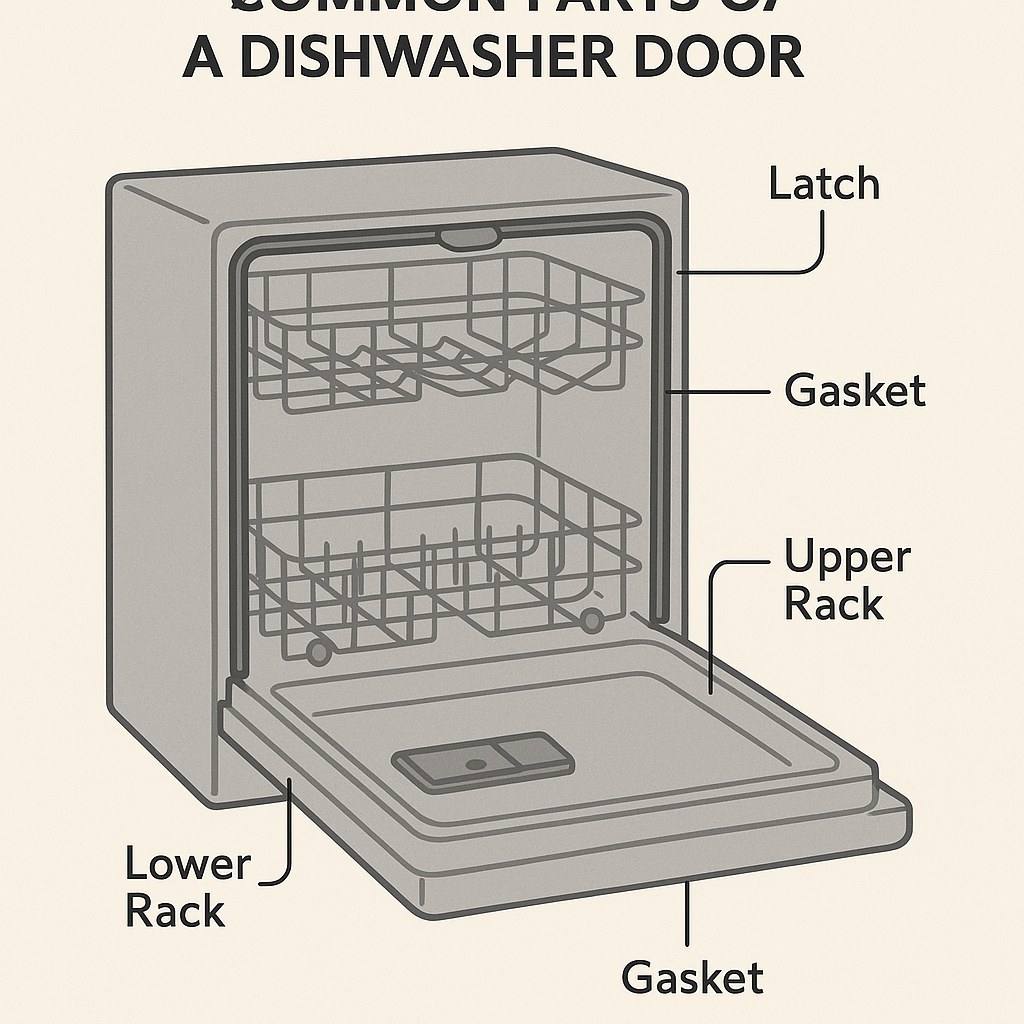 Image Alt: "Illustration of a dishwasher door highlighting the latch, gasket, and dish racks."
Why Your Dishwasher Door Won't Close
Before you start, it helps to know what you’re looking for. A dishwasher door that won’t shut is almost always caused by one of these four things:
- An obstruction: A dish, utensil, or even the rack itself is out of place and blocking the door.
- The child lock is on: Many dishwashers have a control lock feature that can prevent the door from being opened or the cycle from starting.
- A misaligned latch: The latch on the door isn't lining up correctly with the catch on the dishwasher frame, preventing it from clicking shut.
- A problem with the gasket or hinges: The rubber seal (the gasket) around the door might be loose, or the door hinges could be misaligned, causing the door to sit crooked.
Let’s work through these possibilities one by one.
A Step-by-Step Guide to Fixing Your Dishwasher Door
We’ll start with the simplest solutions first. You’ll only need a few basic tools, like a flashlight and a Phillips screwdriver.
Step 1: Check for Obstructions
This is the most frequent cause and the easiest to fix. Something inside the dishwasher is simply in the way.
- Open the door fully and pull both the top and bottom racks out.
- Look for anything sticking out. Are any plates, panhandles, or large utensils extending beyond the edge of the racks? Rearrange them so everything is contained.
- Check the spray arms. Give the spinning spray arms a gentle push to make sure they can rotate freely without hitting any dishes.
- Push the racks back in. Make sure both racks slide all the way to the back of the dishwasher. Sometimes a rack can come slightly off its track and prevent the door from closing.
Once you’ve cleared any potential blockages, try closing the door again. If it latches securely, you’ve solved the problem.
Step 2: Disable the Child Lock
If the door closes but won’t latch or start, check the control panel. Many modern dishwashers have a child lock or control lock feature that can be activated by accident.
- Look for a button with a lock icon or text that says "Control Lock."
- Press and hold this button for 3 to 5 seconds. You should hear a beep or see the indicator light turn off.
Try closing the door and starting a cycle. If this was the issue, your dishwasher should now operate normally.
Step 3: Inspect and Adjust the Door Latch
If the door still won’t click shut, the problem is likely with the latch mechanism. The latch is the metal or plastic piece on the top of the door that locks into a corresponding catch on the dishwasher’s frame.
- Clean the Latch and Catch: Open the door and locate both parts. Use an old toothbrush and a damp cloth to scrub away any built-up soap scum or food debris that might be preventing them from connecting.
- Check for Alignment: Close the door slowly and watch to see if the latch lines up with the catch. If it seems off-center, you can often adjust it.
- Adjust the Catch: Most catches are held in place by two Phillips-head screws. Loosen these screws slightly—just enough so you can move the catch. Nudge it a tiny bit to the left or right to align it with the latch, then retighten the screws firmly.
Try closing the door. A small adjustment is often all that’s needed to get a solid, clicking latch.
Step 4: Check the Door Gasket and Hinges
If the door latches but pops back open or feels crooked, the issue may be with its alignment or the rubber seal. The gasket is the rubber seal that runs around the entire opening of the dishwasher tub to prevent leaks.
- Tighten the Hinges: Open the door and look for the hinge screws at the bottom corners. If they seem loose, tighten them with a Phillips screwdriver until they are snug. Don’t overtighten.
- Inspect the Gasket: Run your finger along the entire rubber gasket. Is it pushed securely into its channel? If you find a loose spot, simply press it back into the groove. Also, look for any areas that are cracked, torn, or flattened. A damaged gasket can prevent the door from sealing properly and may need to be replaced.
When to DIY vs. When to Call a Professional
Most causes of a stubborn dishwasher door are straightforward fixes. Here’s a quick guide to help you decide when to tackle it yourself and when it’s better to call for help.
Safe to Try Yourself
- Rearranging dishes and checking for obstructions.
- Disabling the child lock feature.
- Cleaning and adjusting the door latch mechanism.
- Tightening loose hinge screws.
- Pressing a loose gasket back into its channel.
Time to Call an Appliance Technician
- The door latch is broken. If you inspect the latch and find that it’s cracked, has missing pieces, or is extremely loose, it needs to be replaced. Because this component often contains electrical sensors for the control panel, this repair is best left to a professional.
- The door gasket is badly damaged. Replacing a gasket is a more involved task. While it's possible for a confident homeowner to do, an appliance technician can ensure it's done correctly to prevent leaks. Having your dishwasher model number handy in an app like Casa can make ordering the right part simpler if you decide to try it yourself.
- Nothing else has worked. If you’ve tried all the steps above and the door still won’t close, there may be a less common issue, like a bent door frame or a problem with an internal sensor.
Typical Time and Cost
- DIY Fix: For most of these issues, you can expect to spend 5 to 20 minutes. The cost is often free, unless you need to order a new gasket, which typically costs between $20 and $50.
- Professional Repair: An appliance repair technician will likely charge a service fee for the visit. Depending on your location and the work required, you can expect to pay between $100 and $250 for a diagnosis and simple repair like a latch replacement.
You Can Solve This
A dishwasher that won't close is an unexpected interruption, but it's a manageable one. By working through these steps methodically, you can identify the source of the problem and, in most cases, fix it yourself without any special tools or expertise. Taking a moment to diagnose the issue calmly can save you the time and expense of a service call.
For more guidance on maintaining your home and preparing for common repairs, download the Casa app. We’re here to help you feel confident and in control of your home, one small fix at a time.