The key is to act safely, figure out if you have a one-time visitor or a resident, and take simple steps to secure your home. This guide will walk you through how to assess the situation, what you can safely handle yourself, and when it’s time to call in a professional.
First Steps: Safety Above All Else
Before you do any investigating, your first priority is to protect yourself, your family, and your pets. Animal droppings can carry bacteria and parasites, so it's important to handle them with care.
- Keep a safe distance. Ensure children and pets are kept away from the area until it has been cleaned and sanitized.
- Wear protective gear. Always wear disposable gloves before getting near the droppings. If you are indoors in a confined space like an attic or crawl space, a mask is also a good idea.
- Ventilate the area. If you’re indoors, open any nearby windows or doors to let fresh air circulate before you begin your inspection or cleanup.
Is the Problem Indoors or Outdoors?
The first question to answer is where you found the droppings. Your response will be very different for a raccoon passing through your yard versus one that’s found a way into your attic.
If You Found Droppings Indoors
Finding droppings inside your home suggests an animal may have found an entry point. Here’s how to figure out what’s going on.
Step 1: Assess the Situation
Once you have your gloves on, take a closer look to gather clues.
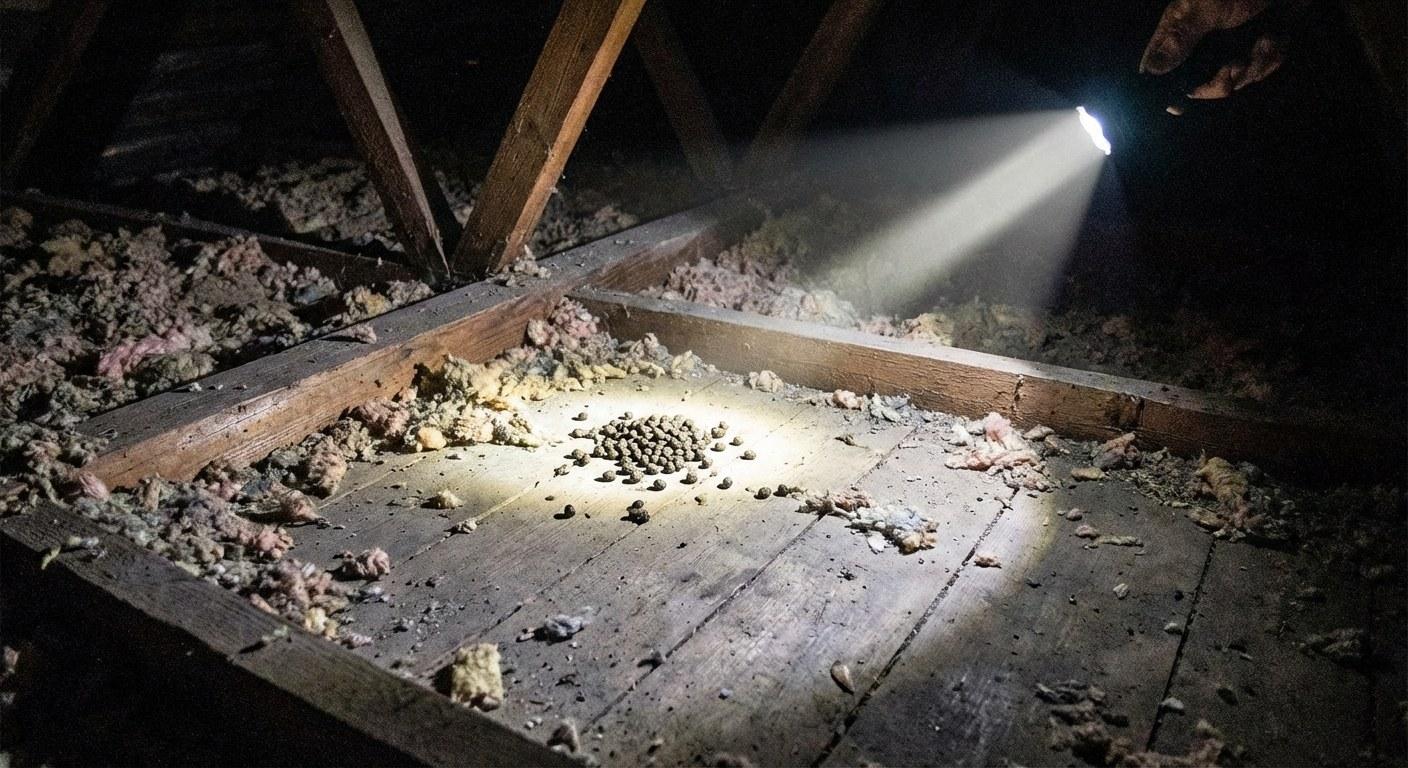
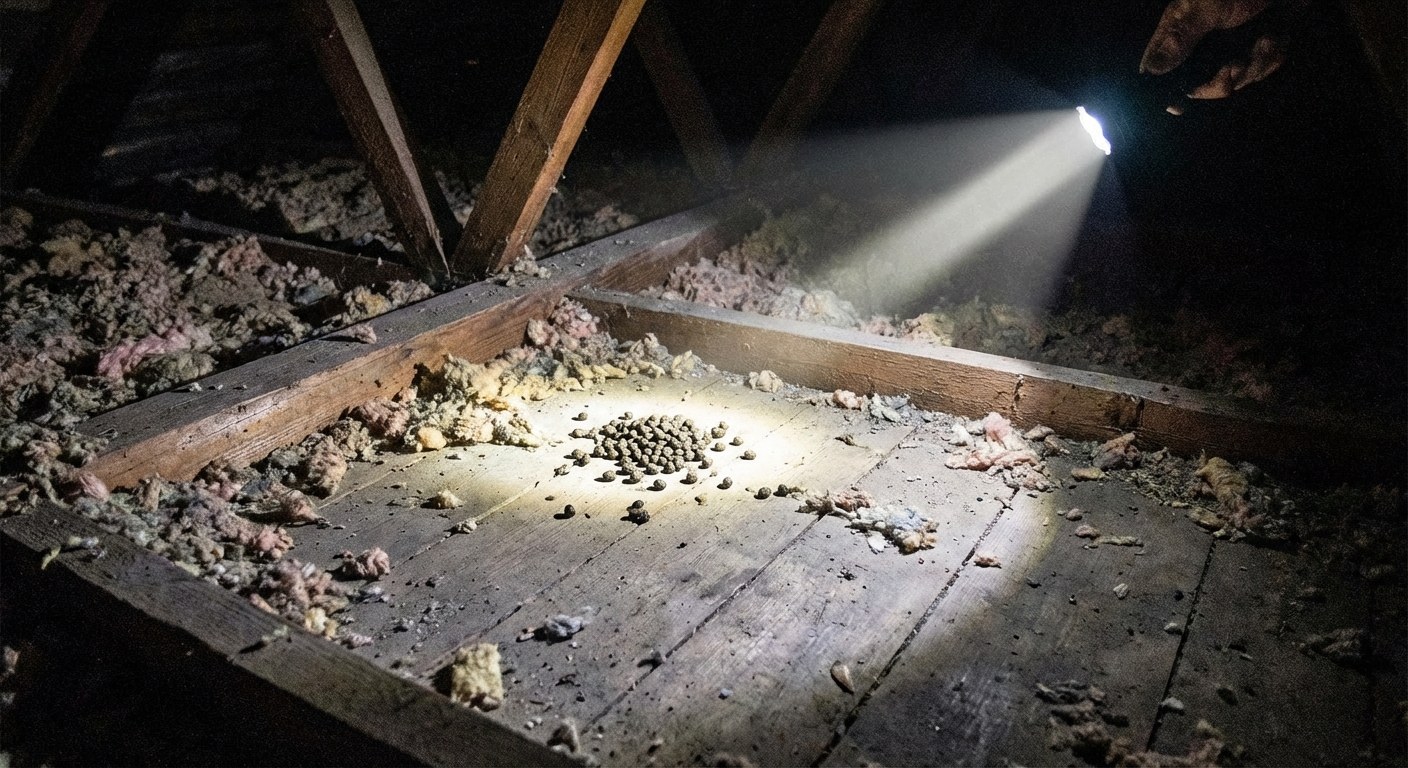
- Look for patterns. Are the droppings in one spot, or are they scattered? Are they fresh, or do they look old and dry?
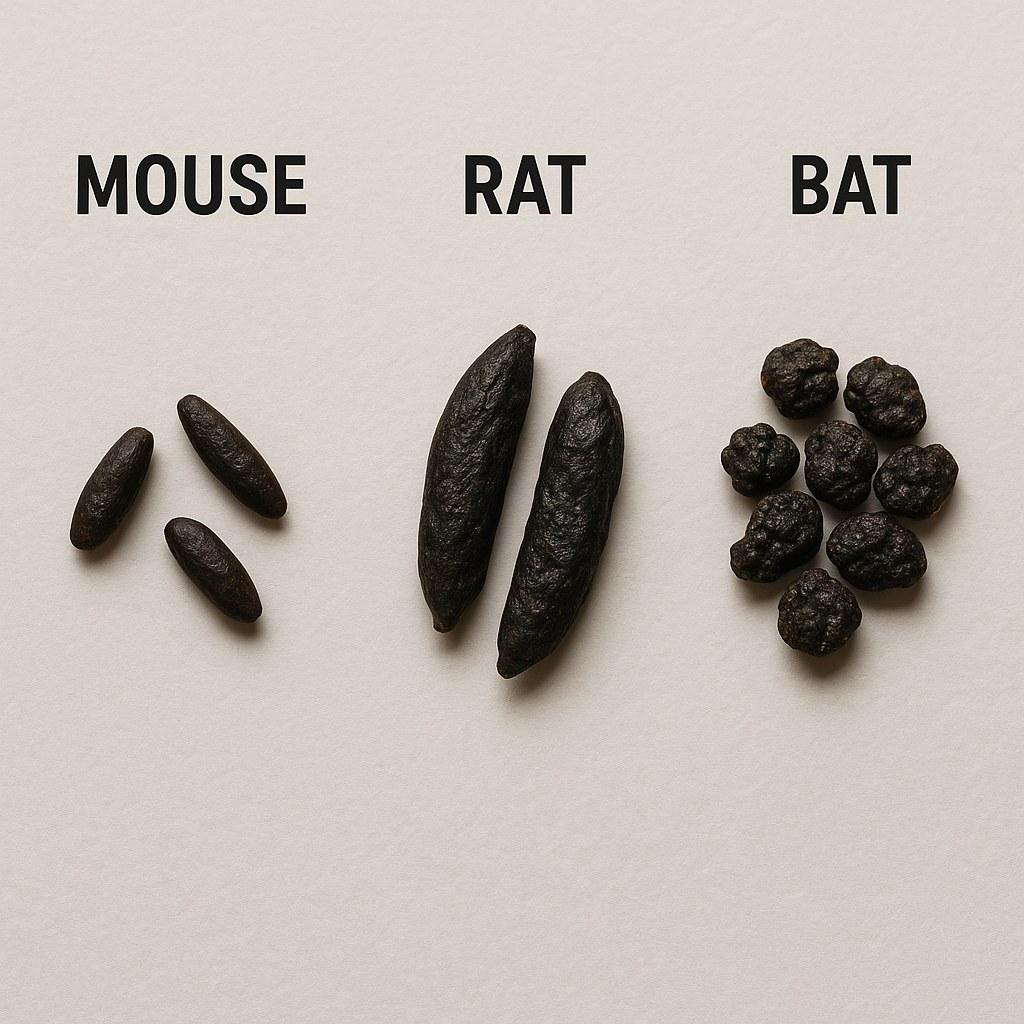
- Note the quantity and size. This can help you or a professional identify the animal later. There’s no need to handle them, but observing their general size is useful.
- Check for other signs. Look for tracks, scratch marks, chewed wires, or nesting materials like shredded insulation or fabric nearby. A musky odor can also indicate a persistent animal presence.
The most important question is whether this is a recurring issue. If you clean the area and new droppings appear within a day or two, you likely have an animal living in your home.
Step 2: Look for an Entry Point
If you suspect an animal is getting inside repeatedly, the next step is to find its doorway.
- Do a thorough inspection. With a bright flashlight, check along baseboards, in corners, and around the seals of doors and windows. Pay close attention to your attic, crawl space, and garage.
- Look for light. Check around vents, pipes, and utility lines that enter the house. Any gap that lets daylight through is a potential entry point for a pest.
- Listen carefully. Sometimes, you can hear scratching or scurrying sounds within walls or ceilings, which can help you pinpoint the location.
What You Can Do Yourself: Seal and Clean
If you find a clear entry point (and are sure the animal is not currently inside), you can often seal it yourself.
To Seal an Entry Point:
- Get the right materials. For holes larger than a half-inch, simple caulk won’t be enough. Use ¼-inch hardware cloth (a type of sturdy wire mesh) and exterior-grade screws.
- Cut a patch. Cut a piece of hardware cloth that is at least two inches larger than the hole on all sides.
- Secure it. Apply a bead of silicone caulk around the opening, then press the hardware cloth patch firmly over it. Secure the patch with screws into the surrounding wood or framing.
To Clean Up Droppings Safely:
- Never sweep or vacuum dry droppings. This can kick dust and harmful particles into the air.
- Soak the area. Use a spray bottle to apply a disinfectant solution (a mixture of 1 part bleach to 9 parts water works well) and let it sit for five minutes.
- Wipe, don't sweep. Use paper towels to pick up the droppings and place everything in a trash bag.
- Disinfect again. Spray the surface one more time and wipe it clean.
- Dispose and wash. Tie the trash bag securely, dispose of it in an outdoor bin, and wash your hands thoroughly with soap and water.
When to Stop and Call a Professional
It’s time to call a pest control or wildlife removal professional if:
- You find new droppings after sealing a potential entry point.
- You can’t find the entry point, but droppings keep reappearing.
- You hear sounds of animals in your walls or ceiling.
- You suspect the animal might be something large or potentially aggressive, like a raccoon or opossum.
If You Found Droppings Outdoors
Droppings in your yard, on your deck, or near your garbage cans are common, especially if you live near woods or green spaces. The goal here is usually deterrence, not removal.
Step 1: Assess the Area
- Look for a pattern. Are the droppings always in the same spot? This might indicate a territorial marking spot or a common pathway.
- Check for attractants. Are your garbage cans securely sealed? Is there leftover pet food outside? Do you have a vegetable garden or fruit trees that might be drawing visitors?
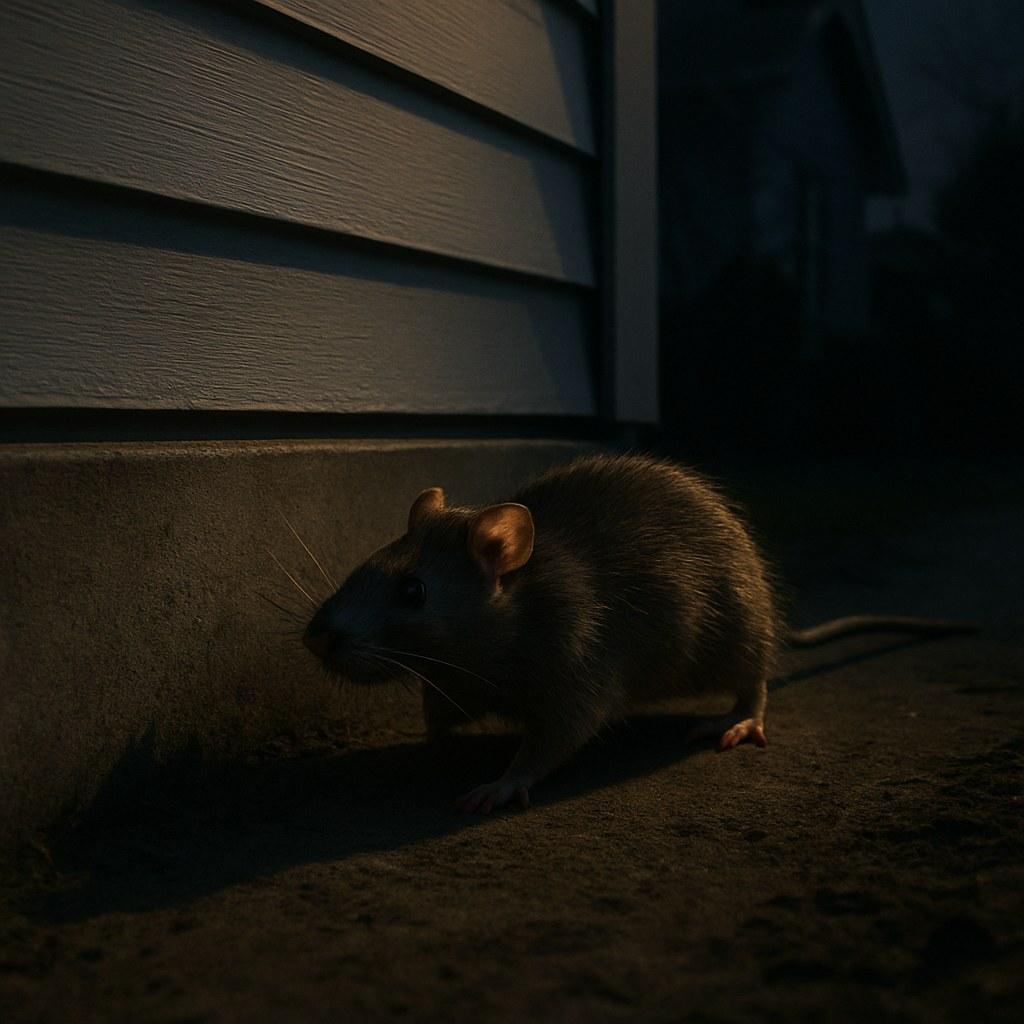
- Try to identify the animal. If you can, use a trail camera or look for tracks. Knowing whether you’re dealing with a deer, a raccoon, or a neighborhood dog will help you choose the right deterrent. Keeping a simple log in a notebook or an app like Casa can help you see patterns over a few days.
What You Can Do Yourself: Deter and Clean
If the animal is not a direct threat, making your yard less welcoming is often the best solution.
- Remove food sources. Secure garbage can lids with bungee cords, bring pet food inside at night, and clean up fallen fruit from trees.
- Install humane deterrents. Motion-activated sprinklers or lights can be very effective at scaring off nocturnal animals without harming them.
- Clean up the droppings. Once you’ve taken steps to deter the animal, clean the area. For outdoor surfaces like a patio or walkway, you can scoop the waste into a bag, then use a bleach solution or disinfectant to wash the area down.
When to Call a Professional
- You suspect the animal is a coyote, wild hog, or raccoon that is acting unusually bold or aggressive.
- The droppings reappear consistently despite your best efforts to deter the animal.
- You’re concerned about the health risks associated with a large amount of animal waste near your home.
Typical Costs and Time
- DIY: For less than $50, you can buy all the necessary supplies: gloves, bleach, hardware cloth, caulk, and a spray bottle. The work usually takes between 30 minutes and a few hours.
- Professional Wildlife Removal: If you need to hire a pro, the cost can vary widely. A simple inspection and consultation might cost $100-$250. A more involved job that includes trapping, removal, and exclusion work (sealing entry points) could range from $300 to $700 or more, depending on your location and the complexity of the problem.
You’ve Got This
Finding animal droppings can feel like an invasion of your space, but it’s a problem with clear solutions. By starting with safety, determining the location, and taking methodical steps, you can resolve the issue and secure your home against future visitors.
And when you’re not sure what to do next, Casa is here to help. Download the Casa app to get personalized home maintenance advice and connect with trusted, local professionals for the jobs you’d rather not handle yourself.