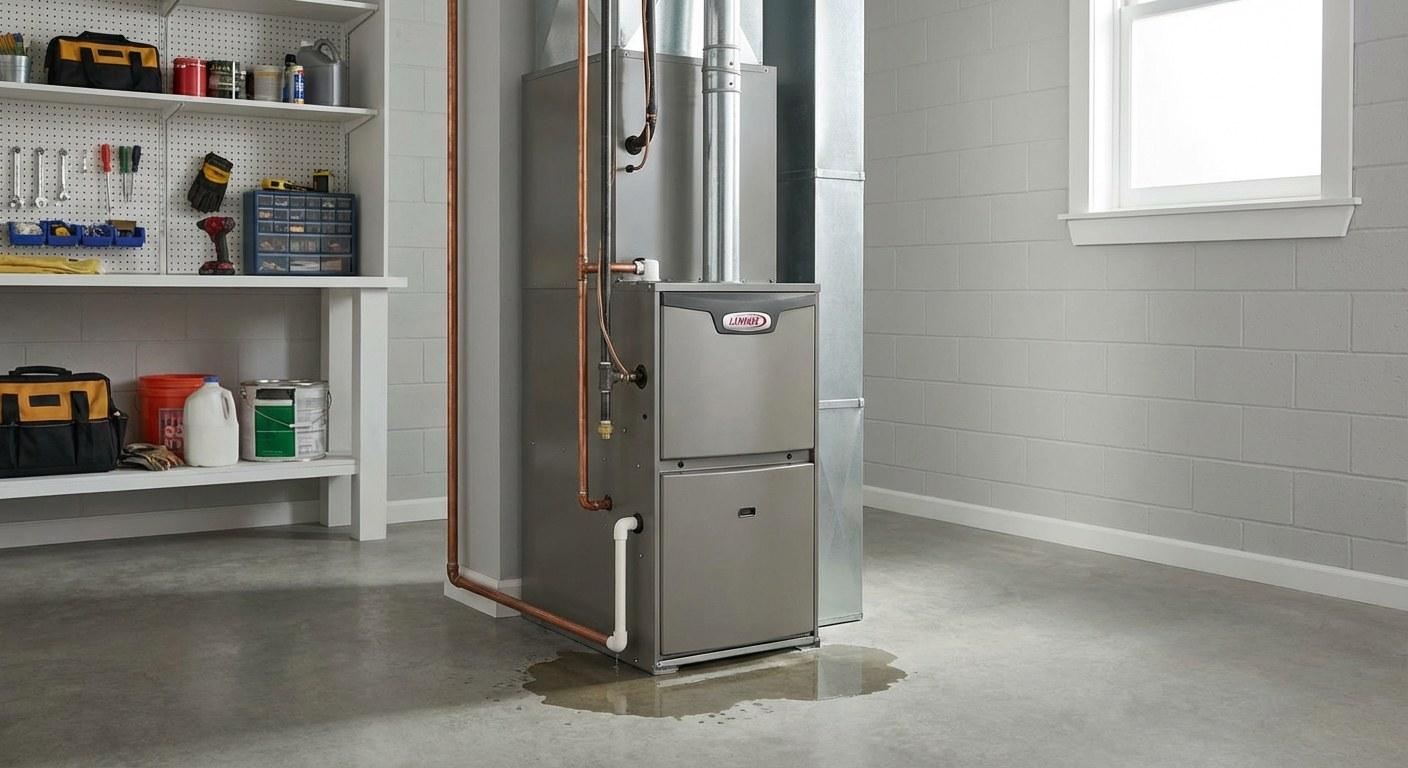
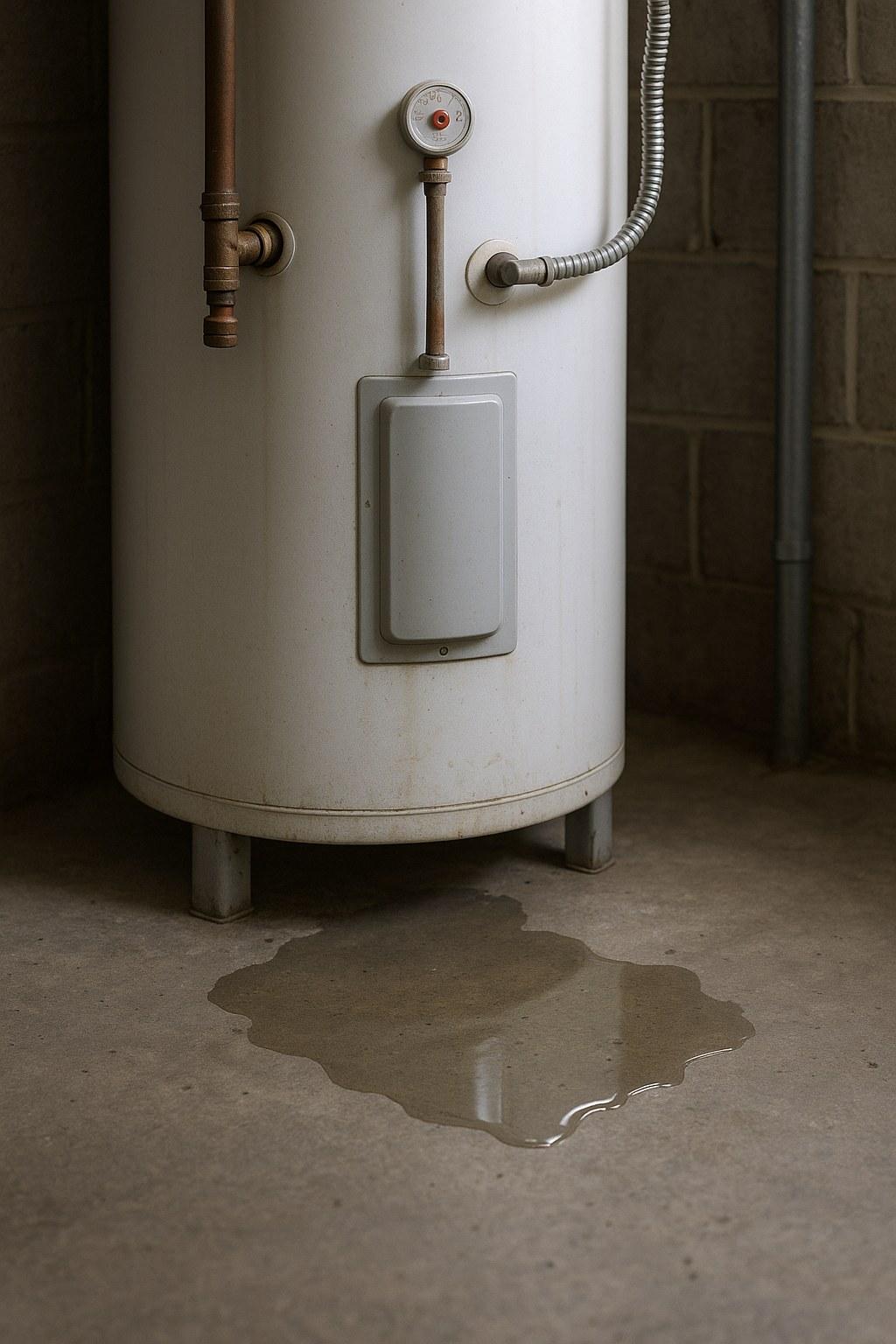
The leak is typically caused by one of two things: a problem with the condensation drainage system in a high-efficiency furnace, or a malfunctioning whole-home humidifier.
The good news is that you can often identify the source and even fix the problem yourself with a few simple steps. This guide will walk you through how to safely diagnose the leak and determine your next steps, whether it's a quick DIY repair or a call to a professional.
First: Safety Above All
Before you begin any inspection, you must turn off the power to your furnace. Locate the service switch—it usually looks like a standard light switch on or near the furnace unit—and flip it to the "Off" position. For added safety, you can also turn off the corresponding breaker in your main electrical panel.
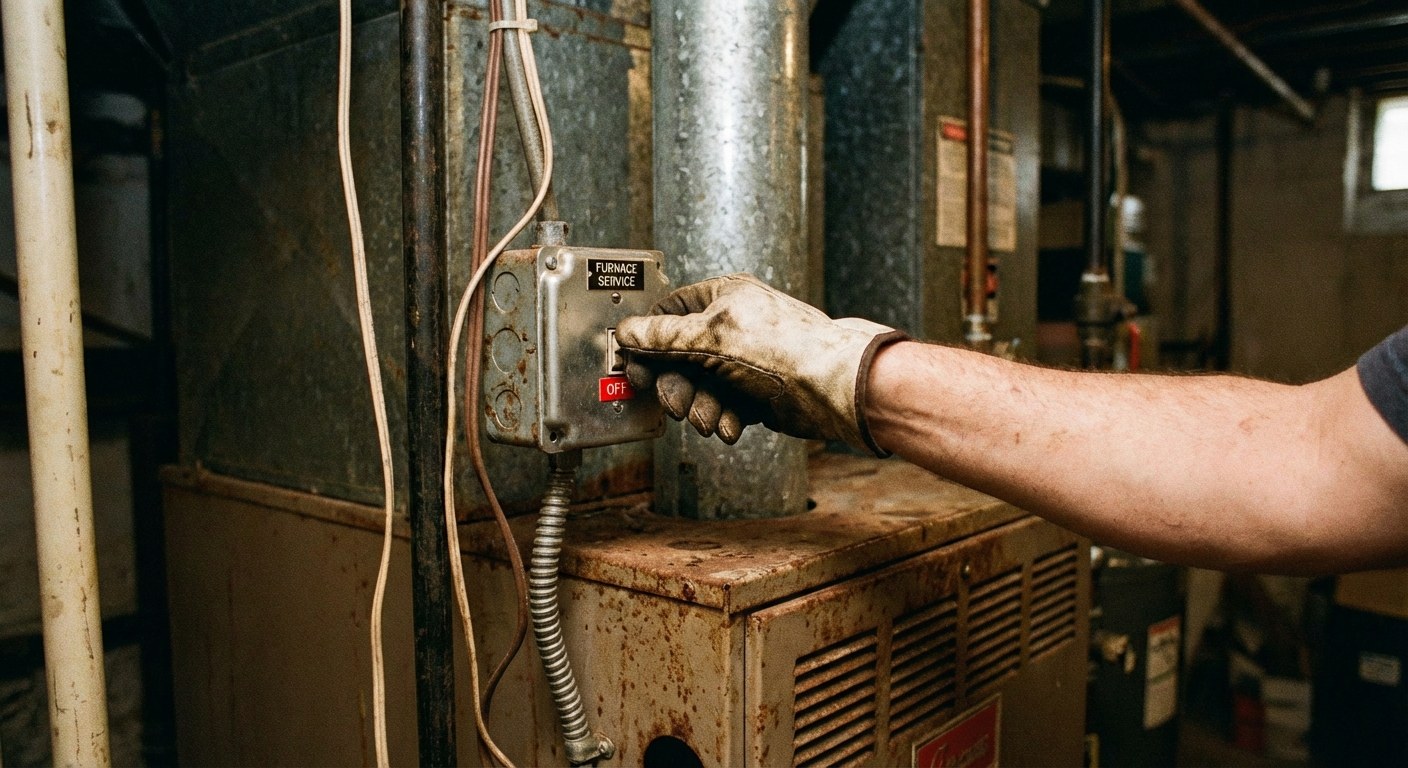 Image: The furnace service switch, typically located on the side of the unit or a nearby wall.
Step 1: Identify Your Furnace Type
The most likely cause of the leak depends on what kind of furnace you have. The easiest way to tell is by looking at the vent pipes that carry exhaust gases out of your home.
- High-Efficiency (Condensing) Furnace: These have white PVC plastic pipes for venting. They are designed to extract extra heat from the exhaust gas, which creates condensation (water) as a byproduct. This is the most common source of furnace leaks.
- Standard-Efficiency Furnace: These use a metal exhaust pipe. They do not create condensation, so a leak from one of these units is almost always related to an attached humidifier or a different plumbing issue nearby.
Once you’ve identified your furnace type, you can narrow down the source of the leak.
Step 2: For High-Efficiency Furnaces (PVC Pipes)
If you see white PVC pipes, the leak is very likely coming from the condensation removal system. This system consists of a collection pan, a drain line, and sometimes a small pump. Let’s check each component.
Check the Condensate Pan and Drain Line
The condensate pan sits at the base of the furnace to collect the water. From there, a plastic tube, called the condensate drain line, carries the water to a floor drain.
- Inspect the Pan: Look closely at the pan for any visible cracks, rust, or holes that could be letting water escape.
- Inspect the Drain Line: Check if the drain line is clogged, cracked, or has become disconnected from the pan. A clog is the most common culprit. Algae and sediment can build up over time and block the flow of water, causing it to back up and overflow the pan.
Safe to try yourself: Clearing a Clogged Condensate Line
If you suspect a clog, you can usually clear it in under 30 minutes.
- You will need: A wet/dry vacuum, a bucket, and a mixture of distilled vinegar and warm water.
- Steps:
- Place a bucket under the drain line where it connects to the furnace to catch any spillage.
- Disconnect the line from the furnace.
- Take the other end of the line (where it drains) and create a tight seal around it with the hose of your wet/dry vacuum.
- Turn the vacuum on for a minute or two to suck out the blockage.
- To clear out any remaining residue, slowly pour the vinegar and water solution through the line from the furnace end.
- Reconnect the line, restore power, and run your system to see if the leak has stopped.
Check the Condensate Pump
If your furnace is installed in a location without a nearby floor drain (like a basement), it may use a small appliance called a condensate pump to move the water. This is a small box near the furnace where the drain line empties.
Look for water overflowing from the pump’s reservoir. If the pump isn't running, it could be clogged with sludge or its motor may have failed.
Safe to try yourself: Servicing a Condensate Pump
- Unplug the pump from its electrical outlet.
- Remove the cover and clean any visible debris from the reservoir and inlet screen.
- Check the small float switch inside. It should move up and down freely. If it’s stuck, the pump won’t activate.
- Reassemble the pump, plug it back in, and test it by carefully pouring a small amount of water into the reservoir. The pump should kick on and drain the water.
Step 3: For Standard Furnaces (or if Condensate System is Fine)
If you have a standard-efficiency furnace with metal vents, or if you've checked your high-efficiency system and can't find a problem, the leak is likely coming from a whole-home humidifier attached to your ductwork.
- Locate the Humidifier: It’s a box-like unit attached to the side of your furnace or the main ductwork.
- Inspect for Leaks: Carefully check the small water supply line that runs to it, the drain line that runs from it, and the area around the unit itself. Look for dripping fittings or cracks in the housing.
- Check the Water Panel: Open the humidifier cover and inspect the internal water panel (also called an evaporator pad or filter). If this panel is clogged with mineral deposits, water can fail to evaporate properly and may leak out. Replacing this panel is part of regular maintenance and is a simple DIY task.
Keeping track of tasks like cleaning drain lines and replacing humidifier filters can feel like a lot. An advisor like Casa can help you build a simple home maintenance plan so you can prevent these kinds of problems before they start.
When to Stop and Call an HVAC Technician
While many furnace leaks are simple to fix, some situations are best left to a professional. It’s time to call a licensed HVAC technician if:
- You are not comfortable shutting off the power to your furnace.
- You cannot find the source of the leak after a thorough inspection.
- The condensate pan is cracked or severely rusted and needs to be replaced.
- You’ve cleared a clog in the drain line, but the leaking continues.
- Your condensate pump motor is burned out and needs replacement.
- You suspect the leak is coming from inside the furnace itself, which could indicate a more serious internal issue.
Typical Time and Cost
- DIY Fix: If you're clearing a drain line or replacing a humidifier panel, you can expect it to take 30 to 60 minutes and cost less than $50 for supplies.
- Professional Repair: A service call from an HVAC technician typically ranges from $100 to $300, depending on your location and the time of the call. Replacing a part like a condensate pump can add another $100 to $250+ for the part and labor.
Your Next Steps
Finding and fixing a furnace leak is a manageable task for most homeowners. By methodically checking your furnace type and inspecting the most likely culprits—the condensate system or the humidifier—you can often resolve the issue quickly and prevent further water damage.
Staying on top of your home's systems is the key to preventing stress and unexpected expenses. For guidance on repairs, maintenance reminders, and a clear plan for your home, download the Casa app. We're here to help you feel prepared and confident in managing your home.