But take a deep breath. This is one of the most common experiences in homeownership. Pests are a natural part of the ecosystem, and finding them doesn't mean you're a bad gardener. It just means your garden is alive.
Most pest problems look worse than they are. Plants are resilient, and you rarely need harsh chemicals to get things back on track. In fact, many infestations can be managed with simple household items or just a pair of gloves.
This guide will help you play detective, identify the culprit, and choose a solution that fits your comfort level—whether that’s organic methods or conventional treatments.
What the Symptoms Usually Indicate
Before you start spraying or buying traps, you need to know who you’re dealing with. Different pests leave different "calling cards."
- Shiny slime trails: If you see silver trails on soil, leaves, or mulch (especially in the morning), you are likely dealing with slugs or snails.
- Clusters of tiny bugs: If you see small, soft insects huddled under leaves, or a sticky residue (honeydew) on the plant, you likely have aphids, mites, or whiteflies.
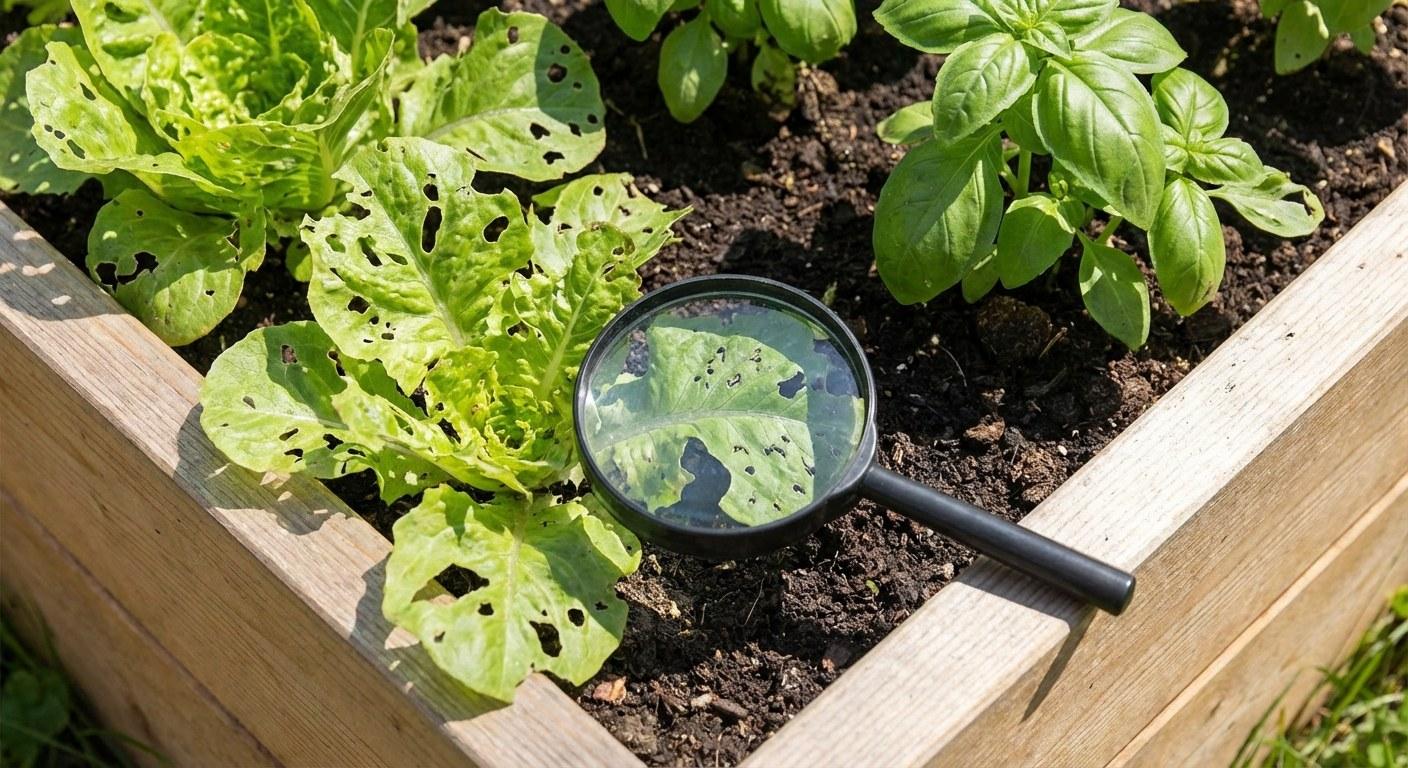
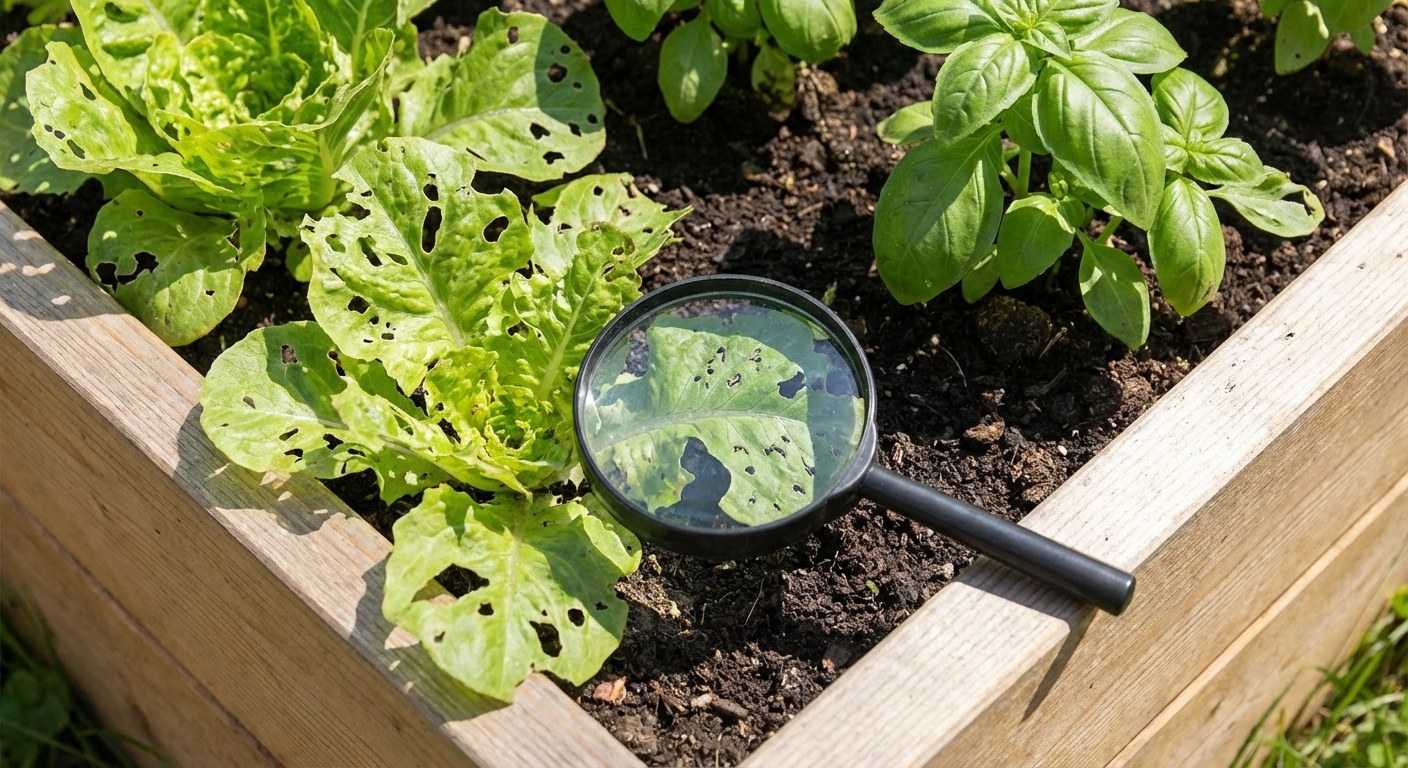
- Chewed holes: If the leaves look like Swiss cheese, or you see bite marks on fruit, you probably have caterpillars or beetles.
- Missing plants or large bites: If whole plants disappear overnight or fruit has large chunks missing, you might be dealing with larger critters like rabbits or deer.
Step-by-Step Diagnosis
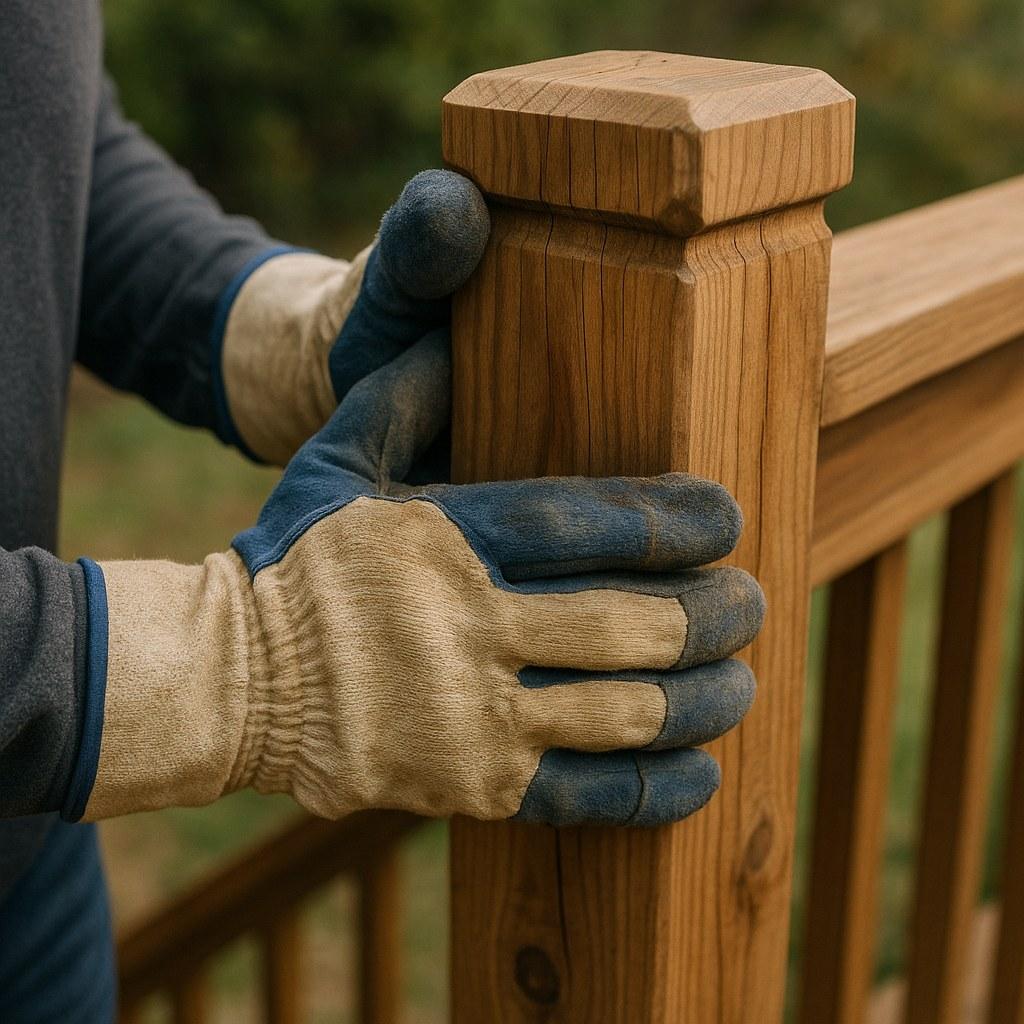
Grab a pair of work gloves and maybe your smartphone to take pictures. The best time to do this is early in the morning when pests are most active and dew makes slime trails visible.
1. Look for the trails.
Check the soil and mulch first. Do you see shiny, silvery slime trails?
- Yes: You have a slug or snail problem.
- No: Move to the next check.
2. Check the undersides of leaves.
Flip the leaves over gently. Do you see clusters of tiny, soft-bodied insects or feel a sticky residue?
- Yes: These are soft-bodied insects like aphids or mites.
- No: Move to the next check.
3. Look for visible chew marks.
Are there distinct holes in the leaves, or do you see actual caterpillars or beetles crawling on the foliage?
- Yes: You are dealing with chewing insects.
- No: If the damage is massive (missing plants) or looks like something took a bite out of a tomato, you likely have a larger animal intruder.
How to Fix It: Three Safe Approaches
Once you know the pest, you can choose your method. We’ve broken these down by pest type.
Scenario A: Slugs and Snails
Safe to try yourself | Low cost
Slugs love moisture and hiding spots. Start by watering only in the morning (so the soil is dry at night) and removing excess mulch or debris where they hide.
- The "Hand-Pick" Method (Best for small issues): Go out about an hour after sunset with a flashlight and tongs. Pick them off and drop them into a bucket of soapy water. Do this for five nights in a row.
- The Organic Method: Bury a shallow plastic container (like a tuna can) so the rim is level with the soil and fill it with 1 inch of beer. Slugs will fall in and drown. Alternatively, sprinkle a ring of diatomaceous earth around the stems.
- The Conventional Method: Scatter iron phosphate slug bait on the soil. It’s effective and generally safer for pets than older slug baits, but always read the label.
Scenario B: Soft-Bodied Insects (Aphids, Mites)
Safe to try yourself | Low to Moderate cost
These pests suck the life out of leaves but are physically fragile.
- The "Water Blast" Method: Often, a strong stream of water from your garden hose is enough to knock them off and disrupt their lifecycle.
- The DIY Soap Spray: Mix 1 teaspoon of mild dish soap into 1 quart of water. Spray directly on the bugs. Rinse the leaves with clean water 2 hours later to prevent sunscald.
- The Organic Spray: Use Neem oil. Spray leaf surfaces (tops and bottoms) at dusk to avoid hurting bees. Repeat every 7 days.
Scenario C: Chewing Insects (Caterpillars, Beetles)
Safe to try yourself | Moderate cost
- Hand-Picking: If the damage is light (less than 10% of the plant), just pick the beetles or caterpillars off with gloved hands and drop them in soapy water.
- Biological Control (BT Spray): For caterpillars, use a spray containing Bacillus thuringiensis (Bt). It’s a bacteria that targets caterpillars but is safe for humans and pets.
- Conventional Spray: For severe infestations, a pyrethrin garden spray can work. Use strictly according to the label, usually in the evening.
Scenario D: Larger Critters (Rabbits, etc.)
Safe to try yourself | Moderate to High cost
- Physical Barriers: This is the only 100% effective method. Install a 3-foot high hardware cloth fence around your garden beds. Bury the bottom 6 inches into the ground so they can't dig under. You can also use lightweight row covers at night.
When to Call a Professional
While most garden pests are a DIY job, there are times to call in help:
- If you can't identify the pest: Contact your local "cooperative extension" office. They are amazing, usually free resources for identifying local bugs.
- If the infestation is massive: If entire beds are being wiped out in 24 hours despite your efforts, you may need a professional applicator.
- If you suspect structural pests: If the damage is near your home's foundation or you see termites or carpenter ants, call a pro immediately.
Typical Time and Costs
Dealing with garden pests is usually very affordable.
- DIY Methods (Soap, Water, Beer): < $5
- Organic Sprays/Baits (Neem, Bt, Slug Bait): $15 – $30
- Physical Barriers (Fencing/Row Covers): $50 – $150 depending on garden size
- Professional Pest Control: $100 – $300 per visit
Time commitment: Expect to spend about 15 minutes a day for a week monitoring and treating the issue. Consistency is more important than intensity.
Recap
- Identify: Slime = Slugs. Clusters/Sticky = Aphids. Holes = Caterpillars/Beetles.
- Start Gentle: Use water blasts or hand-picking first.
- Escalate Slowly: Move to soapy water, Neem oil, or Bt spray if manual removal fails.
- Barrier Up: Fences are the best defense against furry visitors.
Gardening is a process of observation. By catching these issues early, you keep your plants healthy and your harvest safe.
For help tracking your garden maintenance, setting reminders to check for pests, or organizing your home projects, download the Casa app. It’s designed to help you stay ahead of home and garden tasks so you can enjoy your outdoor space rather than worry about it.