Looking for more guidance? Take a look at our Maintenance overview.
 BACK
BACKSEP 12, 2025
How to Remove Stubborn Mineral Deposits in Your Bathroom
 BACK
BACKSEP 12, 2025
Looking for more guidance? Take a look at our Maintenance overview.
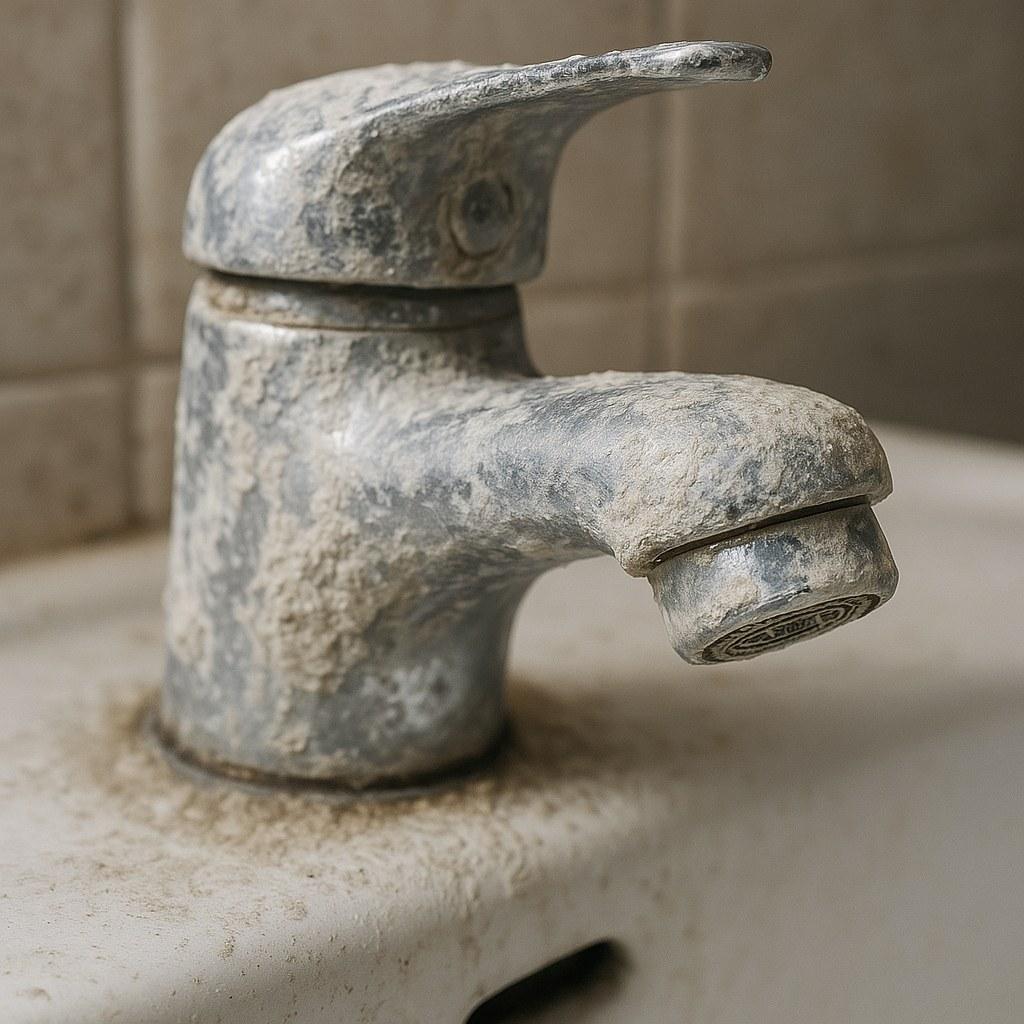
If you’ve ever noticed that chalky, white, crusty film on your faucets, showerhead, or glass shower door, you’re not alone. Those stubborn spots are mineral deposits, often called limescale, and they’re the calling card of hard water. It’s an incredibly common issue—in fact, over 85% of American homes have hard water, which means most of us are in a constant battle against this buildup.
While it might seem like a permanent fixture in your bathroom, the good news is you can absolutely win this fight. A little bit of know-how and the right cleaning method can make your bathroom fixtures and surfaces sparkle like new.
Think of me as your expert on the line, ready to walk you through it. We’ll figure out what kind of surface you’re dealing with and choose the perfect approach, from gentle, natural solutions to heavy-duty removers for the toughest jobs. Let’s get that bathroom shining!
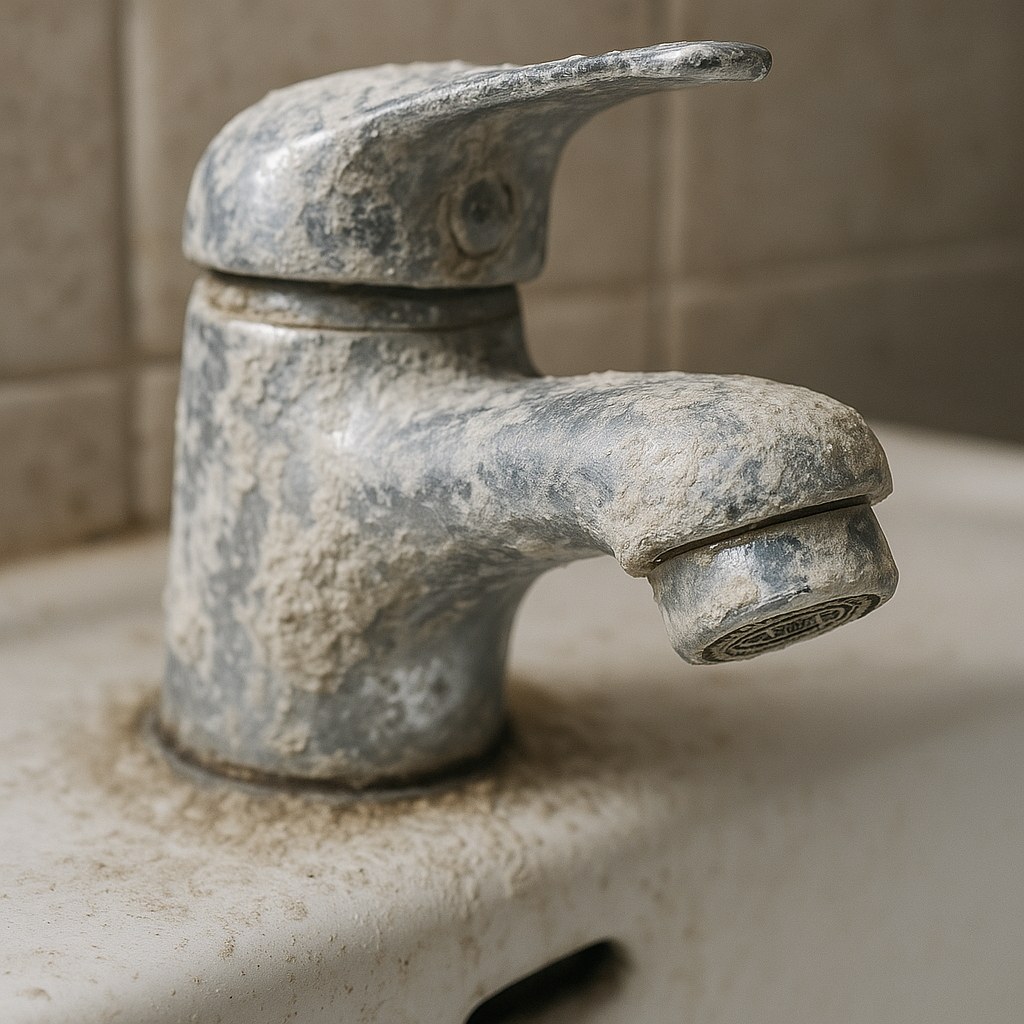
Before we dive into cleaning, let's quickly talk about what we're up against. Hard water is rich in minerals like calcium and magnesium. When water evaporates from a surface, it leaves these minerals behind. Over time, they build up into the chalky, scaly deposits you see. Besides being an eyesore, heavy buildup on faucets and showerheads can actually clog them and reduce water pressure. So, tackling this isn't just about looks—it's also about function.
First things first, let's do a quick walkthrough of your bathroom to assess the situation. Grab a pair of rubber gloves and let’s play detective.
Once you know what you're working with, you can jump to the right section below.
Natural stone like marble, travertine, or limestone is beautiful but delicate. It's porous and sensitive to acids—that means common cleaners like vinegar or lemon juice are a huge no-no, as they can etch and dull the surface permanently. For stone, we need to be gentle.
If the deposits are just a light film, a simple, pH-neutral solution is all you need. A pH-neutral cleaner is one that isn't acidic or alkaline, making it safe for sensitive surfaces.
What You'll Need:
Instructions:
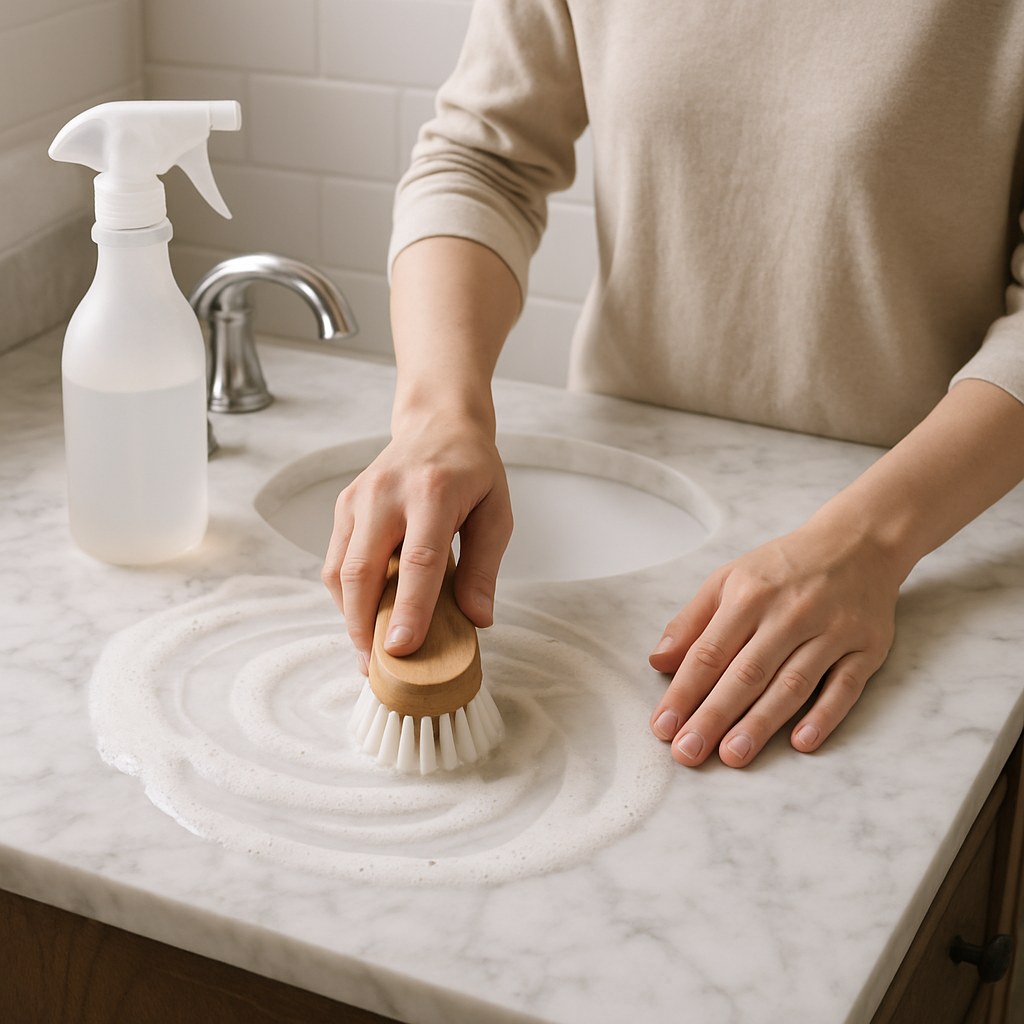
If your fingernail test revealed a hard crust that won’t budge, we need to bring out a slightly stronger, yet still stone-safe, method: a baking soda poultice. This paste will work to draw the minerals out of the stone.
What You'll Need:
Instructions:
If deposits remain: If you still see significant buildup after this treatment, it’s best to stop here. Further DIY attempts could damage the stone. This is the time to call a professional stone-care specialist who has the tools and expertise for resurfacing or deep cleaning without causing harm.
Metal fixtures like faucets and showerheads are magnets for limescale. Luckily, they are generally durable enough to handle a mild acid like vinegar, which works wonders at dissolving calcium and magnesium.
If you just have some light spots around the base or on the handles, a quick spray-and-scrub will do the trick.
What You'll Need:
Instructions:
If your showerhead is sputtering or the faucet aerator is clogged, it’s time for a deep soak. This hands-off method is incredibly effective.
What You'll Need:
Instructions:
If deposits remain: If a long soak doesn’t clear the clog, the fixture might have internal buildup that requires disassembly. At this point, you may want to call a plumber. They can either take the fixture apart for a deep clean or recommend a replacement if it’s too far gone.
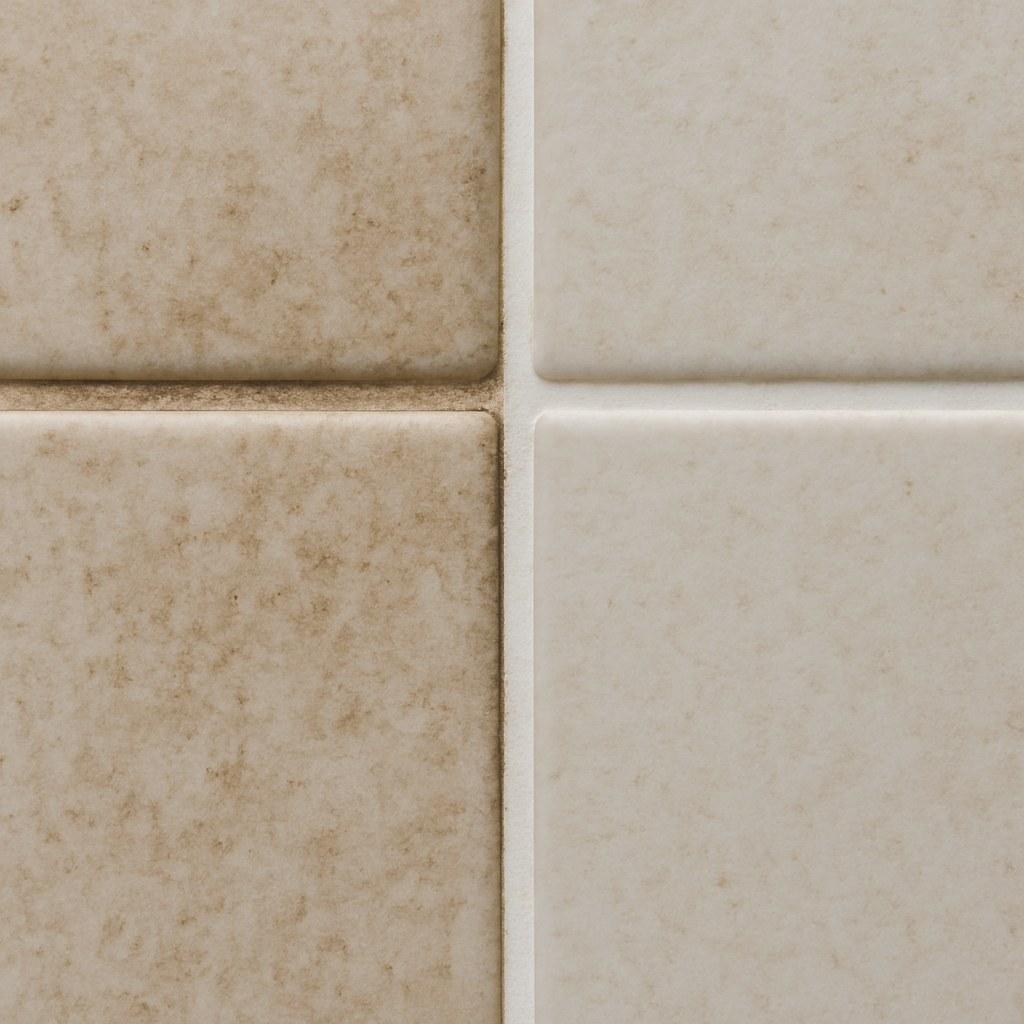
These surfaces are the toughest in your bathroom and can handle more aggressive cleaning methods.
The same vinegar solution that works on metal is perfect for glass, ceramic tile, and porcelain sinks or tubs.
What You'll Need:
Instructions:
If you’re dealing with years of buildup, especially when combined with soap scum, vinegar might not be enough. It’s time to move on to a commercial cleaner designed specifically for this job.
What You'll Need:
Instructions:
If deposits remain: Some mineral buildup can be so severe that it etches the surface. If commercial cleaners don't work, a professional cleaning service can help. For an average cost of $75 to $150, they can bring in specialized tools and stronger, professional-grade products to restore your surfaces without damage.
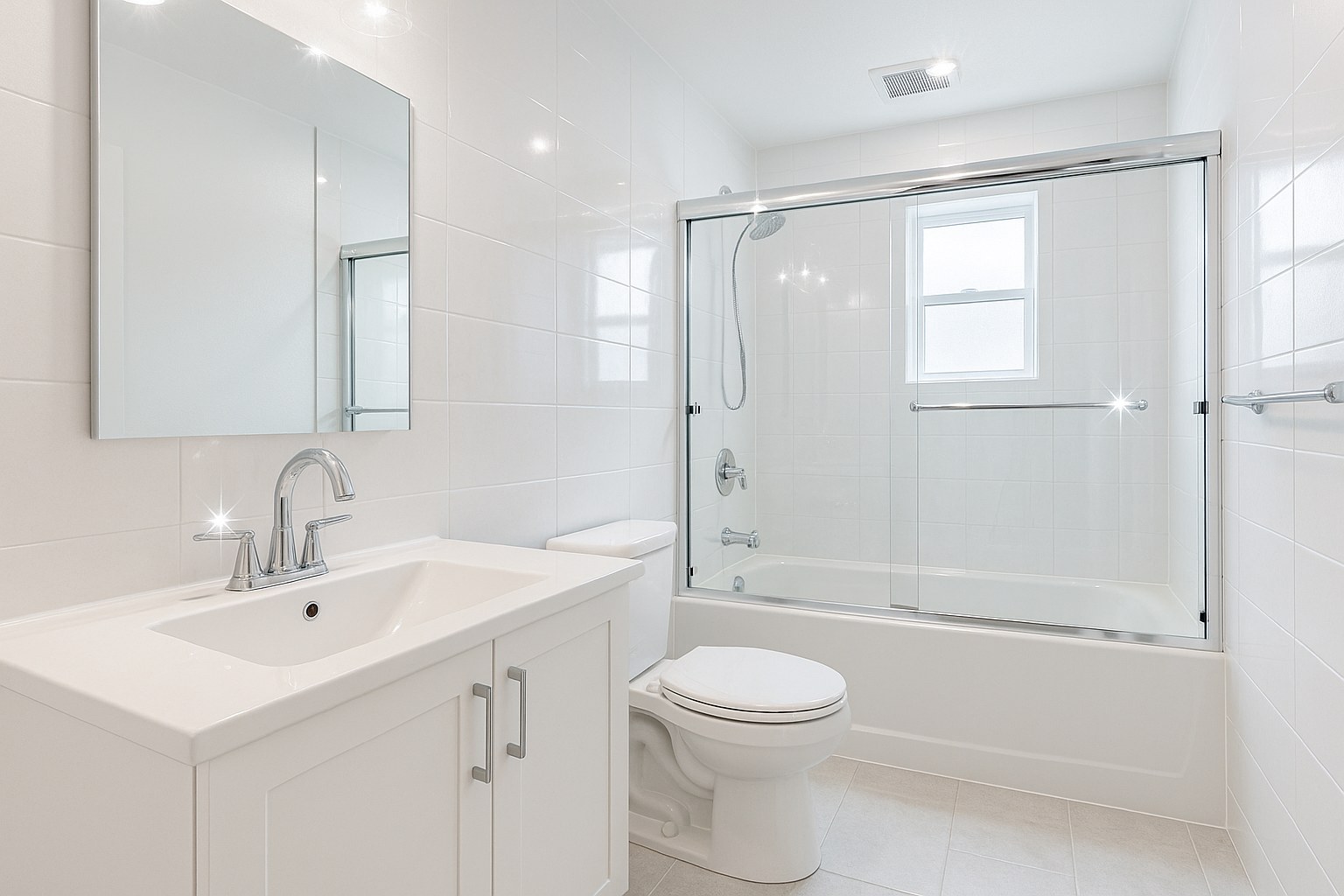
Tired of scrubbing? The best long-term strategy is prevention.
Fixing mineral deposits is a satisfying DIY project that can make a huge difference in your bathroom’s appearance and function. By identifying your surfaces and using the right tools, you can handle almost any level of buildup.
For more easy-to-follow guides and expert advice for every corner of your home, download the Casa app today. Whether you’re tackling a project yourself or need to find a trusted, vetted professional—like a plumber or stone-care specialist—Casa is your go-to resource for seamless home maintenance. Stop letting small problems build up and take control with Casa in your corner.