The goal isn't to eliminate every insect from your yard—many are harmless or even beneficial. The key is to understand when an insect population is causing real damage and to know what steps to take to protect your tree's health.
This guide will walk you through how to inspect your tree, determine the severity of the problem, and decide whether it’s a situation you can handle yourself or one that requires a professional.
What to Look For: Signs of an Insect Infestation
Before you can treat the problem, you need to know what you’re looking for. Put on some work gloves and take a slow walk around your tree, examining the leaves, branches, and trunk. Here are the most common signs of a pest issue:
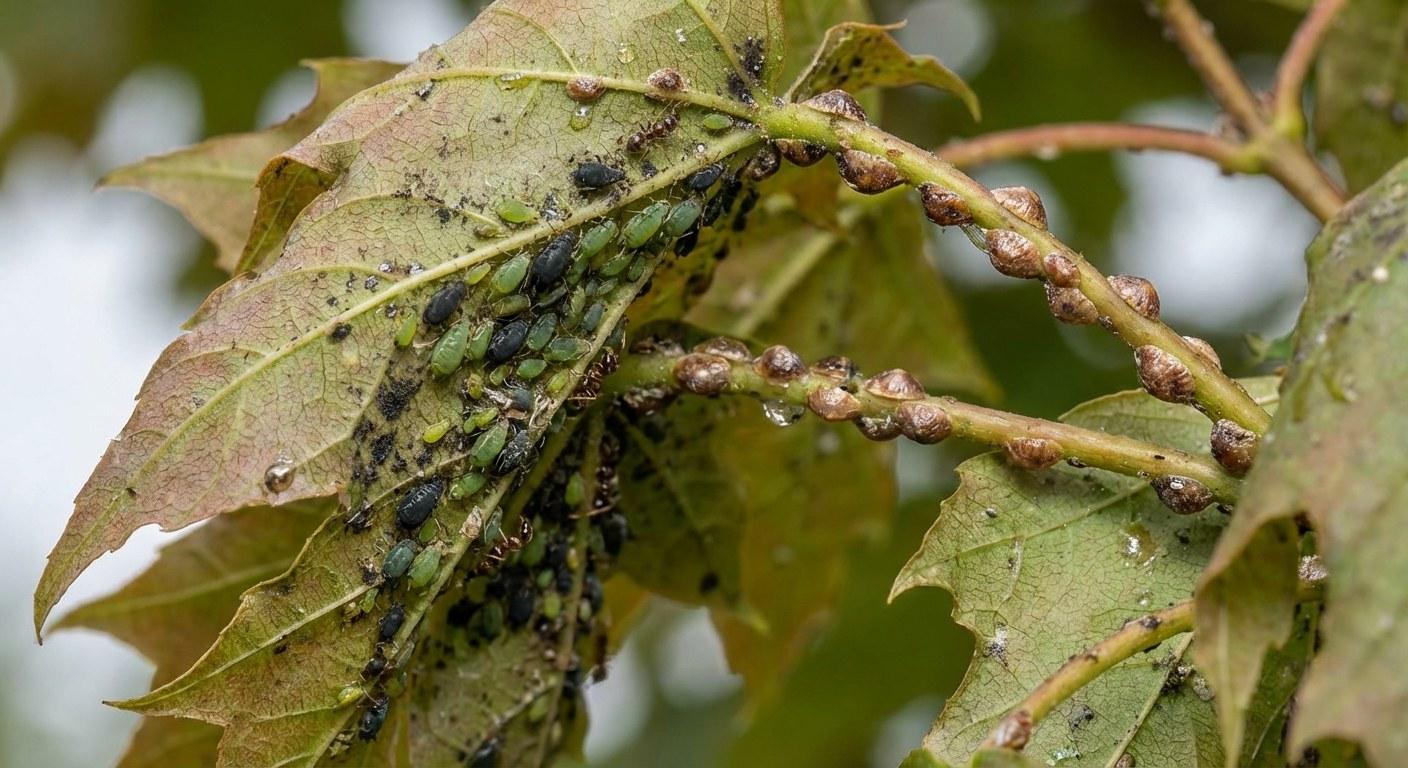
- Visible Insects: You may see clusters of insects like aphids on the undersides of leaves or small, immobile bumps on branches, which could be scale insects.
- Damaged Leaves: Look for leaves that are chewed, discolored, spotted, or curled. This often points to leaf-eating or sap-sucking insects.
- Holes and Sawdust: Small, precise holes in the bark, especially with a fine, sawdust-like material (called frass) around them or at the base of the tree, are a serious red flag for wood-boring insects.
- Sticky Residue: A clear, sticky substance on leaves and branches, called honeydew, is a byproduct of pests like aphids and scale. It often leads to a secondary problem: a black, powdery fungus called sooty mold that grows on the honeydew.
- Damaged Branches: Look for tips of branches that are dying back, which can be a sign that pests are disrupting the flow of water and nutrients.
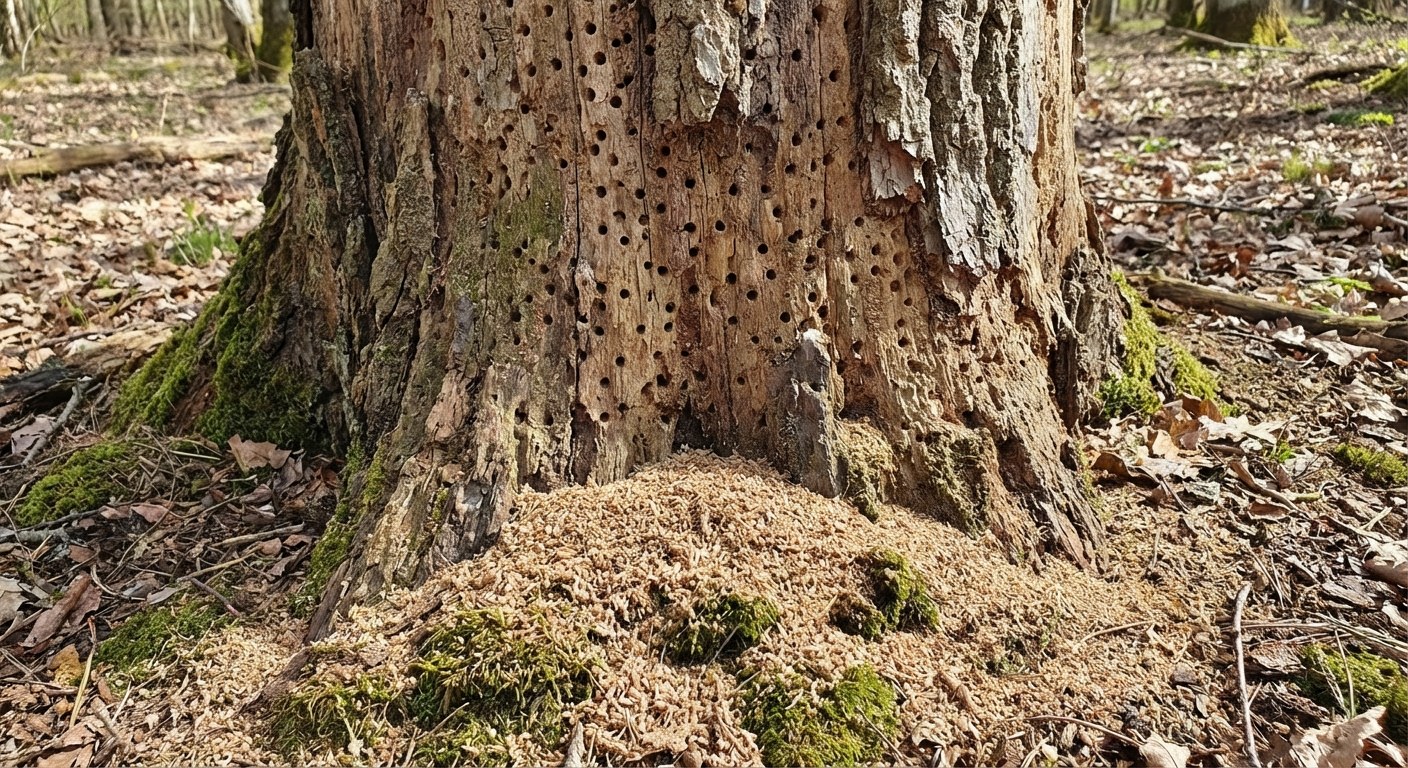 Image alt: Small holes in the bark of a tree with a small pile of sawdust at the base, indicating wood-boring insects.
Step-by-Step Diagnosis: What to Do First
Once you’ve spotted signs of trouble, a systematic inspection will help you figure out your next move.
- Assess the Scope of the Damage: Is the issue contained to just one or two branches, or is it affecting the entire tree? A small, localized problem is much easier to manage.
- Look for Critical Warning Signs: Carefully check the trunk and main branches for holes and sawdust. This is the most important part of your diagnosis, as it separates a manageable issue from a serious one.
- Try to Identify the Pest: If you see insects, take a clear photo. Sometimes a quick online search can help you identify common pests like Japanese beetles, aphids, or spider mites. However, many insects look alike, so don't worry if you can't get a positive identification.
Deciding Your Next Step: DIY vs. Calling a Pro
Based on your inspection, you can now make an informed decision. This is the most critical step, and it’s important to be realistic about what you can handle safely.
When to Call a Professional Arborist Immediately
It’s time to stop and call a professional if you encounter any of the following. An arborist is a certified specialist in tree care who is trained to diagnose and treat complex tree health issues.
- You see signs of wood-boring insects. Holes in the bark with sawdust are a clear indicator of borers. These pests tunnel deep into the tree, and over-the-counter sprays can't reach them. They require professional treatments, such as systemic injections, to save the tree.
- The infestation is on a large, mature tree. If you cannot reach the entire canopy with a sprayer while standing safely on the ground, do not attempt to treat it yourself. Using ladders while operating spray equipment is dangerous, and professionals have the proper tools to do the job safely and effectively.
- You cannot confidently identify the pest. The wrong treatment can be ineffective or even harm your tree and the surrounding environment. An arborist can provide an accurate diagnosis and recommend the correct solution.
When It's Safe to Try a DIY Treatment
You can likely handle the problem yourself if all of the following are true:
- The infestation is limited to a few easy-to-reach branches.
- The tree is small enough that you can spray all affected areas from the ground.
- You do not see any signs of wood-boring insects (no bark holes or sawdust).
How to Treat a Minor Tree Pest Problem Yourself
If your situation fits the DIY criteria, here are two common and effective treatment methods. Always read and follow the product label directions exactly, and wear gloves and safety glasses. The best time to spray is on a calm, dry day when temperatures are mild to avoid the spray drifting or damaging the leaves.
Option 1: Spot Treating Affected Branches
This method is ideal for small, contained infestations.
- Prepare Your Sprayer: Fill a pump sprayer with a pre-mixed or diluted insecticidal soap solution. Insecticidal soap is a low-toxicity pesticide that works on contact with soft-bodied insects like aphids and mites.
- Protect the Area: Lay a tarp on the ground beneath the branches to catch any runoff.
- Spray Thoroughly: Coat the tops and bottoms of all leaves on the affected branches. You must spray the insects directly for the soap to be effective.
- Remove Damaged Parts: After spraying, use hand pruners to clip off any heavily damaged or curled leaves and seal them in a trash bag for disposal.
- Monitor: Check the tree again in a week. If you still see live insects, it may be time to call a professional for a stronger treatment.
Option 2: Treating the Whole Tree
If the pests are more widespread on a smaller tree, you may need to treat the entire canopy. The right product depends on the type of tree.
For Ornamental or Shade Trees:
Horticultural oil is a highly refined oil that works by suffocating insects and their eggs.
- Mix the Solution: Dilute the horticultural oil in a pump sprayer according to the "summer rate" on the label. Using the "dormant rate" during the growing season can burn the leaves.
- Spray from Bottom to Top: Start at the trunk and lower branches, working your way upward and outward. Coat every branch and all leaf surfaces until they are wet and dripping.
- Check in a Week: If live insects are still present after seven days, contact an arborist for further evaluation.
For Fruit or Nut Trees:
Food safety is the top priority here. You must use a product specifically labeled for use on edible plants.
- Choose the Right Product: Use insecticidal soap, as it has a very short pre-harvest interval (the time you must wait between spraying and picking the fruit).
- Protect Other Edibles: If you have a vegetable garden nearby, cover it with plastic sheeting to protect it from spray drift.
- Spray for Full Coverage: Starting from the top of the tree, spray every branch and leaf until the solution runs off.
- Monitor: Check for live insects after a week. If the problem persists, an arborist can recommend stronger treatments that are still safe for fruit trees.
What to Expect: Time and Cost
-
DIY Treatment:
- Time: 30–60 minutes for inspection and treatment.
- Cost: Usually under $50 for a pump sprayer ($15–$30) and a bottle of insecticidal soap or horticultural oil ($10–$20).
-
Professional Treatment:
- Time: An initial consultation may take an hour, with treatments scheduled later.
- Cost: Costs can vary widely. An arborist consultation typically ranges from $75 to $200. Treatments can range from $200 for a simple spray on a small tree to over $1,000 for complex injections on a large, mature tree.
Taking the Next Step
Dealing with a tree pest infestation is a process of careful observation and making the right call. By inspecting the tree thoroughly, you can determine if it's a small issue you can resolve yourself or a larger problem that needs an expert. Remember, calling an arborist for borers, large trees, or unknown pests is always the wisest and safest choice.
Keeping track of seasonal treatments and monitoring your trees can feel like a lot to manage. The Casa app can help you set reminders and keep notes on your home's exterior maintenance, so you never miss a step.
Feeling prepared is the best way to reduce homeowner stress. Download the Casa app to get organized and stay ahead of home maintenance, inside and out.