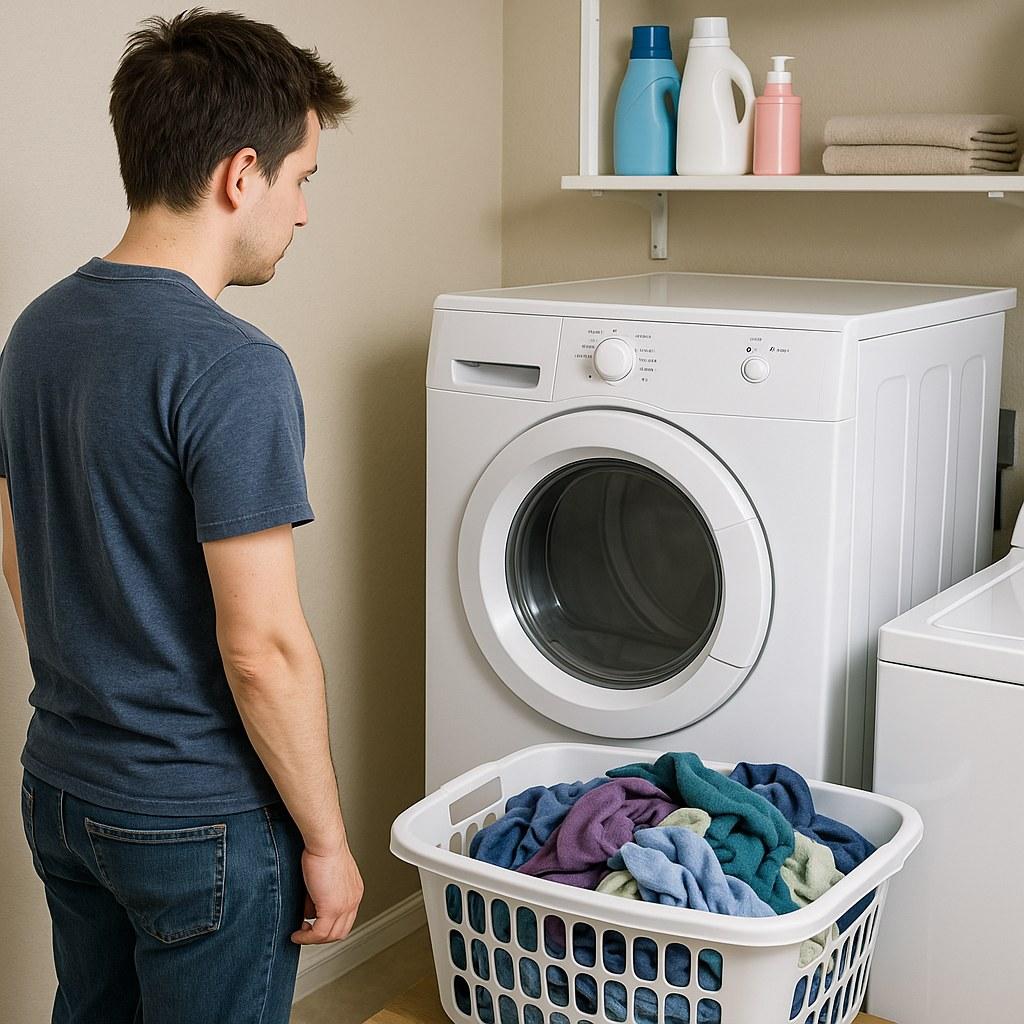
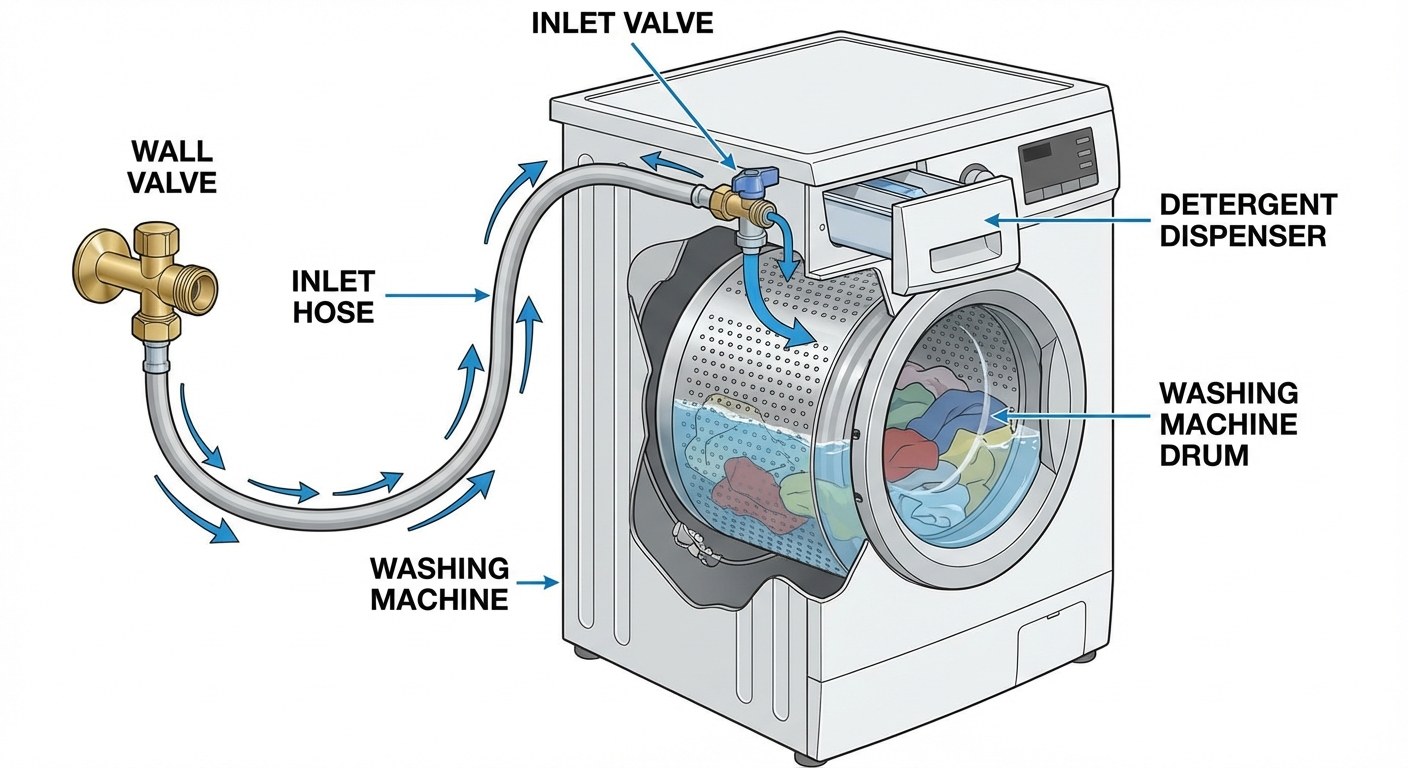
The problem usually isn't with the washing machine's motor or electronics, but with the path the water takes to get into the drum. Before you call for a repair, a few simple checks can often solve the mystery and get your laundry day back on track.
This guide will walk you through the diagnostic process, from the simplest settings to the water supply itself.
What Usually Causes a Washer to Not Fill
When a washing machine doesn't fill, the issue almost always falls into one of these categories:
- A Simple Setting or Error: Modern washers have safety features and settings, like a "Delay Start" function or error codes, that can prevent a cycle from beginning.
- Water Supply Problem: The issue could be as simple as the water supply valves at the wall being turned off or not opened fully.
- Kinked or Damaged Hoses: The hot and cold water inlet hoses behind the machine can get bent or kinked, blocking water flow.
- Clogged Inlet Filters: Tiny mesh screens inside the water connections on the washer can get clogged with sediment over time, preventing water from entering.
- A Faulty Part: Less commonly, an internal component like the water inlet valve or the lid switch may have failed.
We’ll work through these possibilities methodically, from easiest to most involved.
How to Diagnose and Fix a Washer That Won’t Fill
Before you begin, find your washer’s user manual if you have it. It can be very helpful for identifying specific error codes or buttons. If you can't find it, the Casa app is a great place to store digital copies of manuals for all your home appliances.
Step 1: Check the Control Panel and Power Cycle
Let's start with the simplest fixes at the machine's control panel.
- Look for Error Codes: Check the display for any codes like "IE," "NF," or "F8 E1." These often indicate a water inlet or fill problem. If you see one, consult your manual for its specific meaning. You can usually clear the code by pressing and holding the "Cancel" or "Pause/Cancel" button for a few seconds.
- Check for "Delay Start": Many washers have a feature that delays the start of a cycle. If the "Delay Start" or "Delay Wash" light is on, press the button repeatedly until the timer shows "0" to disable it.
- Perform a Reset: Sometimes, the machine's electronics just need a quick reset. Unplug the washing machine from the wall, wait about a minute, and then plug it back in.
After trying these steps, attempt to start a normal wash cycle. If the machine begins to fill, you’ve solved it. If not, it’s time to check the water supply.
Step 2: Inspect the Water Supply Path
For this step, you will need to access the back of your washing machine. You may need a pair of adjustable pliers, a small bucket, and an old towel.
Safety First: Before you move the machine or disconnect any hoses, unplug it from the electrical outlet to prevent any risk of shock.
- Access the Hoses: Carefully pull the washing machine about a foot away from the wall so you can comfortably see and reach the hot and cold water hoses.
- Check the Water Valves: Locate the hot and cold water valves on the wall. Ensure they are turned fully on (counter-clockwise). It's surprisingly common for these to be accidentally bumped or partially closed.
- Inspect the Hoses for Kinks: Look at both water inlet hoses. Are there any sharp bends or kinks restricting the flow? Gently straighten them out if you find any. While you're there, run your hand along each hose to check for any bulges, cracks, or leaks. A damaged hose should be replaced immediately to prevent a leak.
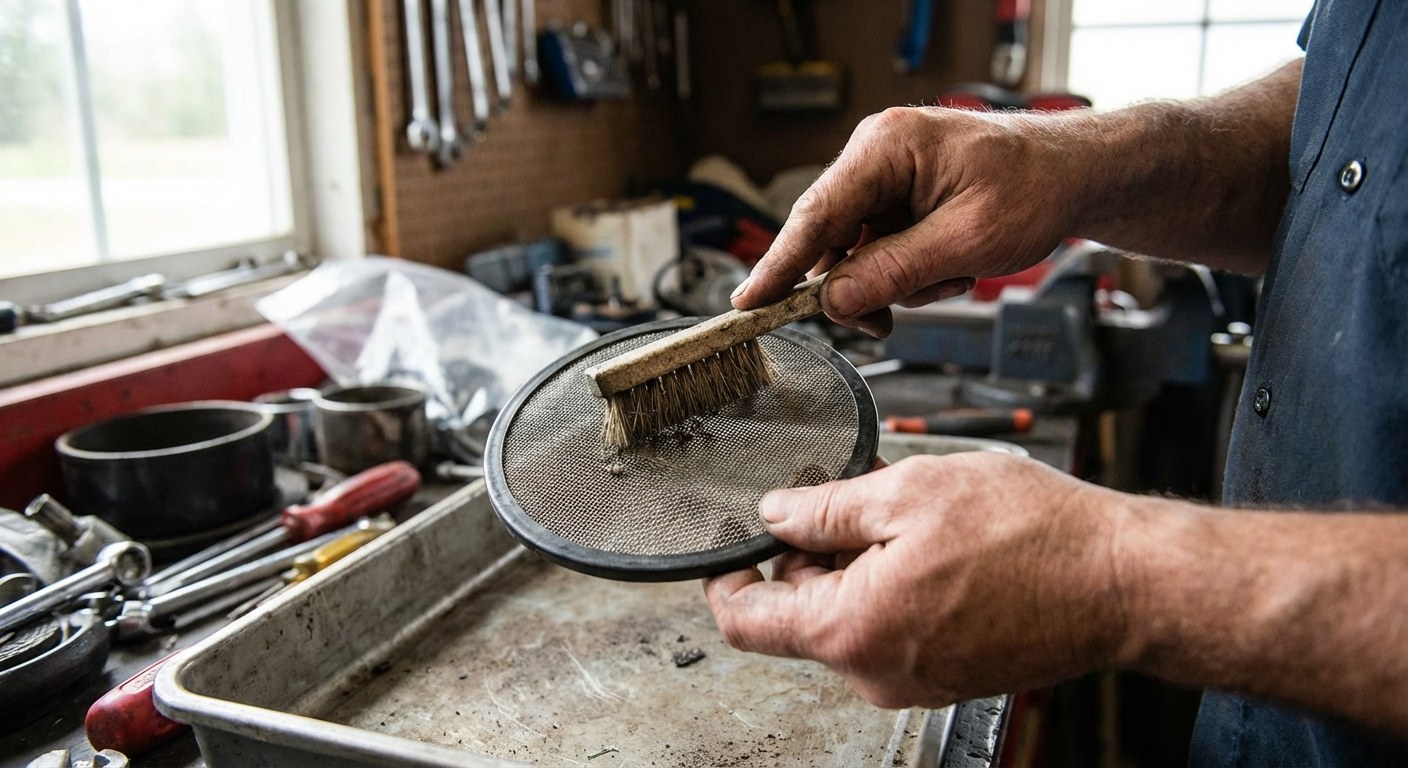
- Clean the Inlet Filters: This is one of the most common causes of a washer not filling. Over time, sediment and mineral deposits can clog the small filter screens where the hoses connect to the machine.
- Turn the water supply valves on the wall fully off (clockwise).
- Place a bucket or towel under the connections to catch any residual water.
- Using pliers, carefully unscrew the hoses from the back of the washing machine.
- Inside each connection port on the washer, you will see a small, round mesh screen. This is the inlet filter.
- Gently pry out each filter with a small flathead screwdriver or a pair of needle-nose pliers.
- Clean the screens thoroughly with a small brush (an old toothbrush works well) under running water until all debris is gone.
- Carefully press the clean filters back into place.
- Reconnect and Test: Re-attach the hoses to the washing machine, tightening them by hand first, then giving them a final quarter-turn with the pliers to ensure a snug, leak-free seal. Turn both water valves on the wall all the way. Plug the machine back in and start a test cycle.
If water now flows into the drum, you've fixed the problem. You can carefully push the washer back into place.
When to Stop and Call a Professional
If you have completed all the steps above and your washing machine still refuses to fill, the issue is likely with an internal component. Continuing to troubleshoot from here often requires specialized tools and knowledge of appliance electrical systems.
It’s time to call an appliance repair technician if:
- You’ve confirmed the water supply is on, the hoses are clear, and the filters are clean, but no water enters the machine.
- Water trickles in very slowly, even after cleaning the filters.
- The machine fills with water but immediately drains it without starting the wash cycle.
The problem could be a faulty water inlet valve (the part the hoses connect to), a malfunctioning lid switch (which tells the machine the door is closed), or a failed water level sensor. These are not typically considered safe or simple DIY repairs.
Typical Time and Cost
- DIY Fix: If your issue is a kinked hose or a clogged filter, your only cost is your time. The process should take between 20 and 40 minutes. If you need to replace a damaged inlet hose, a new pair typically costs between $20 and $40.
- Professional Repair: A visit from an appliance technician usually involves a service call fee ($75 - $150), plus the cost of parts and labor. Replacing a water inlet valve, for example, could cost between $150 and $300 in total, depending on your location and washer model.
A Clear Path to a Clean Solution
Dealing with a non-filling washer is an inconvenience, but it’s a manageable one. By starting with the simplest solutions—checking the settings and power—before moving on to the water supply path, you can solve the majority of problems yourself without needing to call for help.
Staying prepared for common home issues like this one is what we're all about. Download the Casa app to keep track of your home's systems, store appliance manuals, and get clear, steady guidance for your next project.
Related Reading