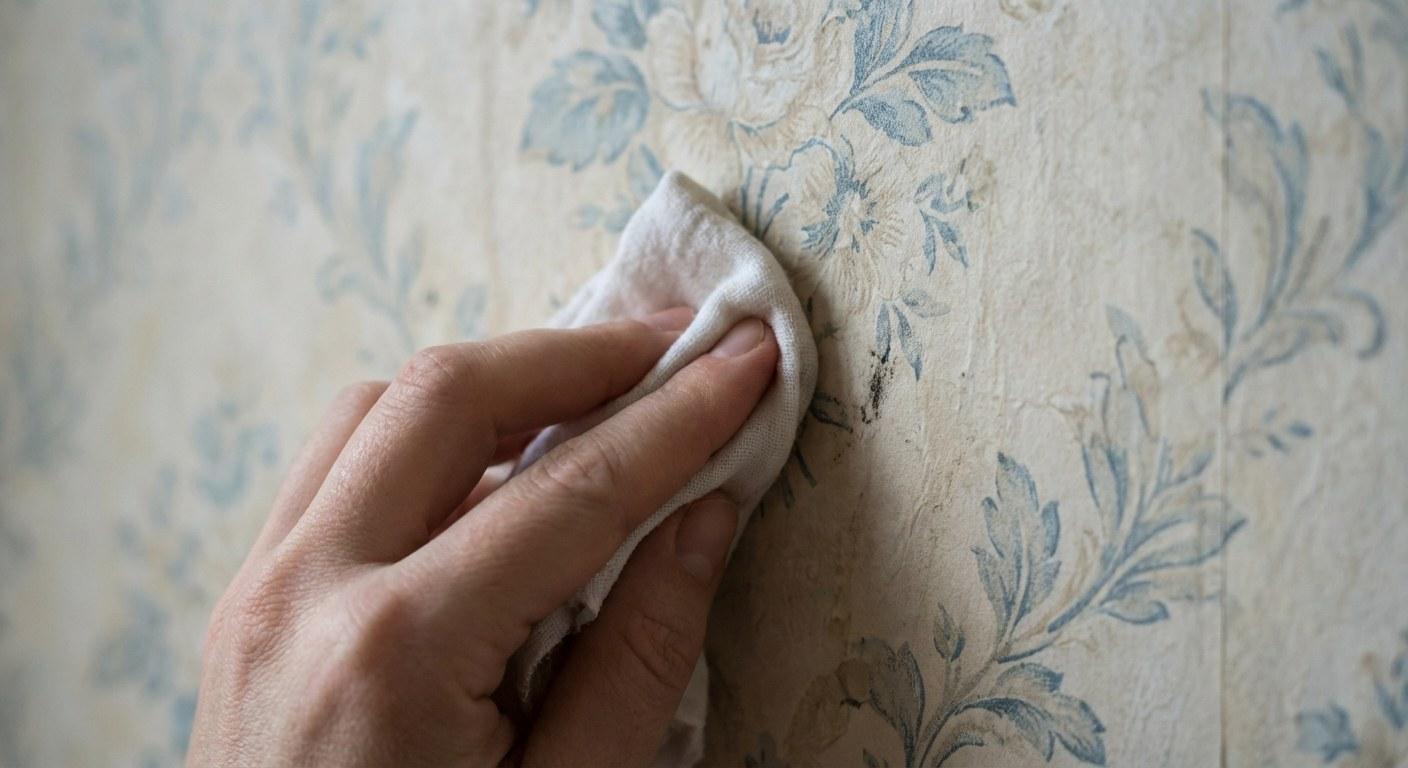
But before you start worrying about re-papering the entire room, take a breath. Most wallpaper stains are removable with a little patience and the right technique. The key is knowing exactly what kind of wallpaper you have and treating it gently.
Whether it’s a splash of coffee, a crayon masterpiece from a toddler, or just general grime, this guide will help you assess the damage and clean it up without making things worse.
Is This a Stain or a Leak?
Before you grab a sponge, we need to rule out a bigger problem. Sometimes what looks like a surface stain is actually water damage coming from behind the wall.
- Touch the spot. Gently press the back of your hand against the stained area and the seams nearby. Is it cold or damp?
- Check for texture changes. Shine a flashlight across the wall. Are there bubbles, peeling edges, or “tide marks” (wavy brown lines)?
If the wall is damp or bubbling: Stop immediately. This is likely a plumbing leak or roof issue, not a surface stain. Cleaning the surface won't help, and rubbing wet drywall can cause it to crumble. You need a professional to locate and repair the leak.
If the wall is dry: Great. It’s just a stain, and we can likely clean it.
Phase 1: Identify Your Wallpaper Type
You cannot treat all wallpaper the same way. Vinyl wallpaper is durable and water-resistant, while paper or fabric wallpaper is delicate and absorbent.
- Vinyl / Washable: Feels slick, smooth, or plastic-like. Water beads up on the surface. (Most common in kitchens and bathrooms).
- Delicate / Paper: Feels like heavy paper or fabric. It absorbs water quickly and has a matte texture. (Common in bedrooms and dining rooms).
Phase 2: The Cleaning Process
- Time: 5–25 minutes
- Cost: $0–$10 (using household items)
- Difficulty: Easy to Moderate
Method A: For Vinyl or "Washable" Wallpaper
If your wallpaper is vinyl, you have more freedom to use moisture.
What you’ll need:
- Warm water
- Dish soap
- Two microfiber cloths
- Baking soda (for tough stains)
Step 1: The Soap Test
Mix one quart of warm water with a teaspoon of dish soap. Dip a microfiber cloth in, wring it out until it is just damp (not dripping), and dab an inconspicuous corner of the wallpaper near the floor. If the pattern or color doesn't transfer to the cloth, you are safe to proceed.
Step 2: Blotting (Water-Based Stains)
If the stain is from food, dirt, or beverages:
- Using your damp soapy cloth, lightly blot the stain. Do not scrub. Scrubbing can remove the pattern even on vinyl.
- Work from the top of the stain downward.
- Rinse the area by blotting with a fresh cloth dampened only with clear water to remove soap residue.
- Pat dry immediately with a dry towel.
Step 3: The Baking Soda Paste (Oil/Grease Stains)
If the stain is greasy or the soap didn't work:
- Mix two tablespoons of baking soda with one tablespoon of water to make a paste.
- Apply a thin layer over the stain with your finger.
- Let it sit for five minutes. The baking soda helps draw the oil out of the paper.
- Wipe away gently with a damp cloth, then rinse and dry as described above.
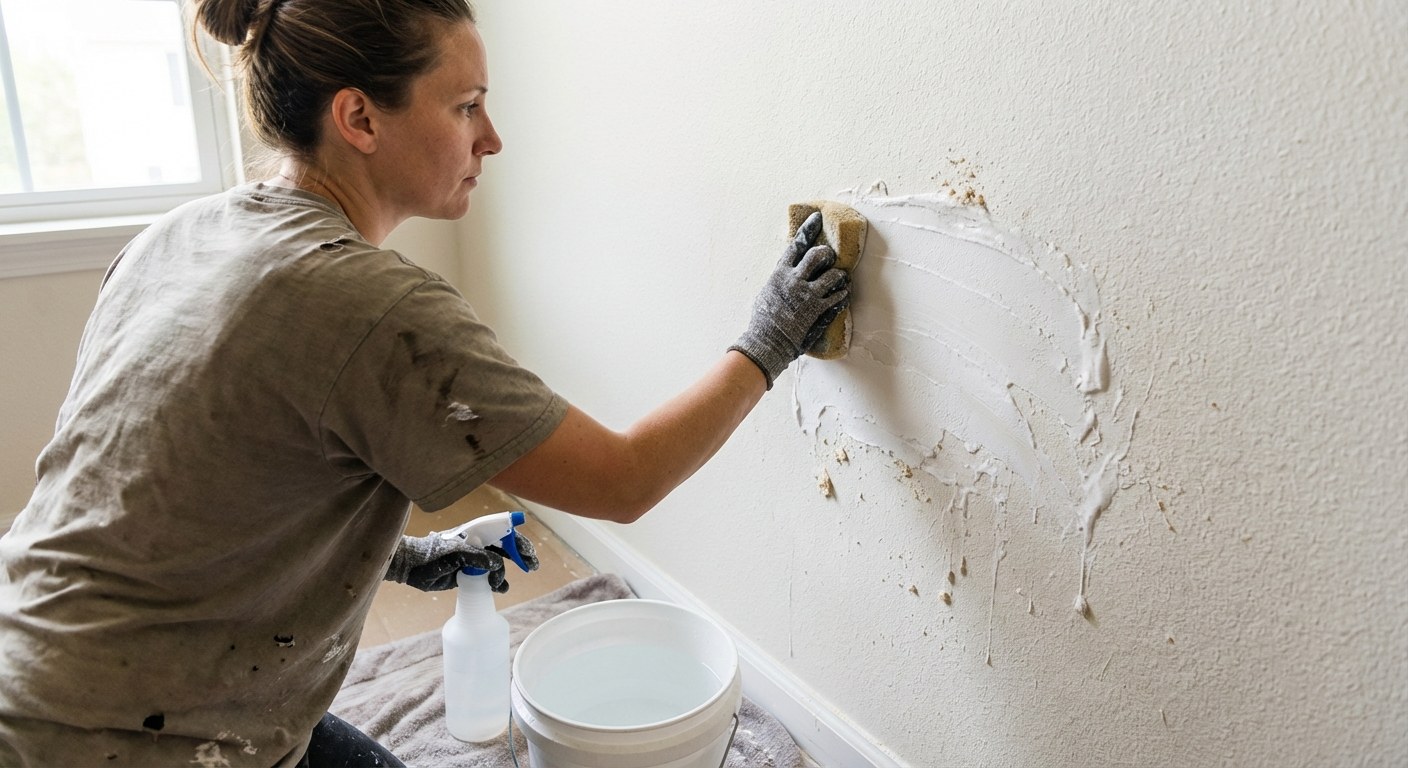
Method B: For Delicate or Paper Wallpaper
If your wallpaper is standard paper, you must keep water away from it. Water can cause the paper to warp, bubble, or stain further.
What you’ll need:
- Dry-cleaning sponge (available at hardware stores)
- Art gum eraser
Step 1: The Dry Sponge
A dry-cleaning sponge (sometimes called a soot sponge) works like an eraser for walls. It lifts dirt without moisture.
- Press the dry sponge flat against the stain.
- Lift it straight off. Do not drag or rub, as this can tear the fibers.
- Rotate the sponge to a clean spot and repeat until the stain lifts.
Step 2: The Art Gum Eraser
If the sponge doesn't get everything, try a soft art gum eraser.
- Knead the eraser to make it pliable.
- Gently dab the stain, lifting discoloration.
- Brush away crumbs with a soft, dry paintbrush.
When to Call a Pro
If you have tried these methods and the stain remains—or if the wallpaper starts to fray or lose color—stop. Continuing to clean a stubborn spot usually results in a permanent abrasion mark that looks worse than the original stain.
At this point, you have two options:
- Call a wallpaper restoration pro: They have specialized chemicals and techniques.
- Patch the area: If you have leftover rolls from the installation, a handyman can often cut out the stained section and splice in a fresh piece seamlessly.
Keeping Your Walls Fresh
Wallpaper adds character to a home, but it does require a gentler touch than paint. Keeping a record of your wallpaper type and leftover scraps can save you a headache later.
If you like keeping your home history organized, Casa is a great place to store details about your finishes—like your wallpaper brand or installation date—so you have them handy when repairs pop up.
Download the Casa app today to keep your home maintenance simple, organized, and stress-free.