Looking for more guidance? Take a look at our Repairs overview.
 BACK
BACKNOV 5, 2025
How to Change Your Ceiling Fan Direction for Summer and Winter
 BACK
BACKNOV 5, 2025
Looking for more guidance? Take a look at our Repairs overview.
Did you know your ceiling fan is more than just a one-season wonder? It’s a year-round tool for comfort and energy efficiency. With the flick of a switch, you can change your ceiling fan's spin direction to help cool you down in the summer and keep you warm in the winter. It’s one of the simplest home maintenance tasks you can do, and it can have a real impact on your energy bills.
Many people don't realize their fan has this feature or aren't sure which way it should spin. If your fan feels like it's just pushing hot air around in August or creating an unwanted chilly breeze in January, you've come to the right place.
In this guide, we'll walk you through everything you need to know about how to change your fan’s spin direction. We'll cover why it matters, how to identify your fan's controls, and provide simple, step-by-step instructions for every type of fan. Let’s get started!
The direction your fan blades spin determines whether they create a downward breeze or an upward draft. Each has a specific purpose tied to the season. Getting it right can help you feel more comfortable and reduce the strain on your heating and cooling systems.
According to the U.S. Department of Energy, using a ceiling fan can allow you to raise your thermostat by about 4°F in the summer without any reduction in comfort, leading to significant savings on your air conditioning costs.
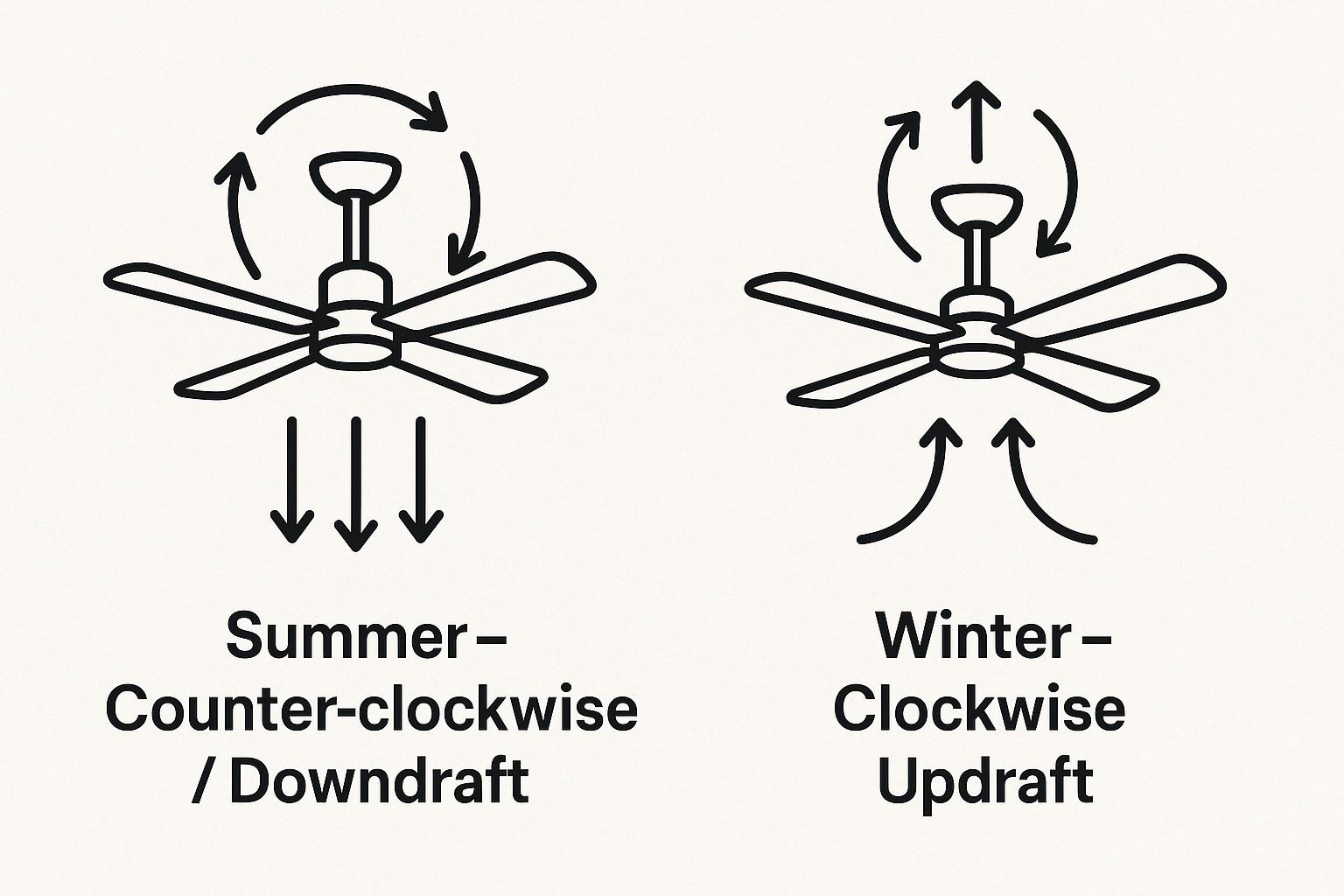
In the summer, you want your fan to spin counter-clockwise. When you look up at it, the blades should be moving from right to left.
This motion pushes air straight down, creating a direct, cooling downdraft. This is known as the "wind chill effect." It doesn't actually lower the room's temperature, but the breeze moving across your skin helps evaporate moisture and makes you feel cooler. This allows you to rely less on your expensive air conditioner.
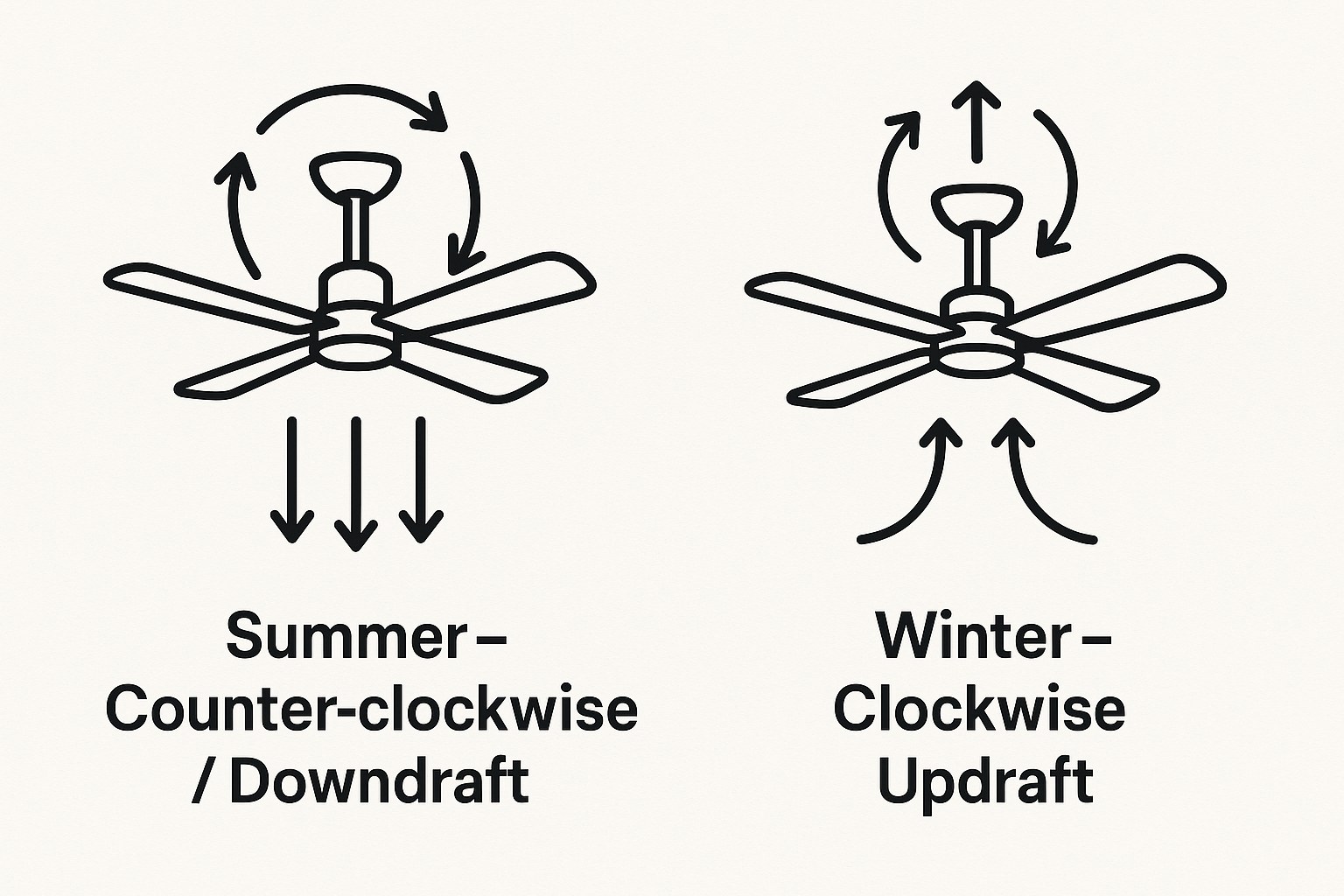
In the winter, you should set your fan to spin clockwise on a low speed. Looking up, the blades will move from left to right.
This direction pulls cool air up from the center of the room and pushes the warm air that naturally rises and gets trapped at the ceiling down along the walls. This process gently circulates the warm air, distributing it more evenly throughout the room without creating a chilly breeze. It helps your heating system work more efficiently, as you're making better use of the heat it's already producing.
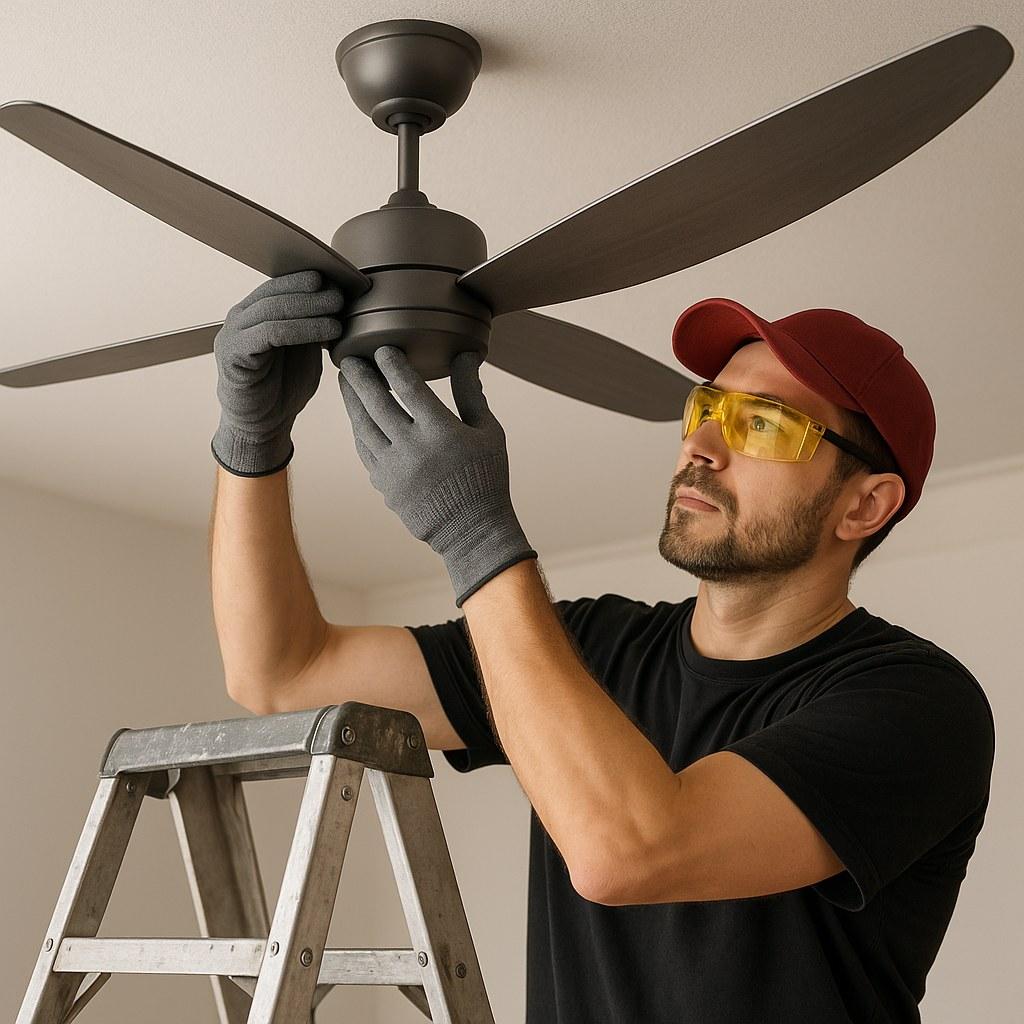
Before you grab a ladder, let's cover two quick but crucial steps: safety and identification.
Safety First!
Identify Your Fan's Reversing Mechanism
Ceiling fans use one of three common methods to reverse direction. Take a moment to look at your fan to see which one you have:
Once you know which type you have, you're ready to make the change.
Let's walk through how to change the direction for each type of control.
This is the most common mechanism, especially on standard or slightly older fans.
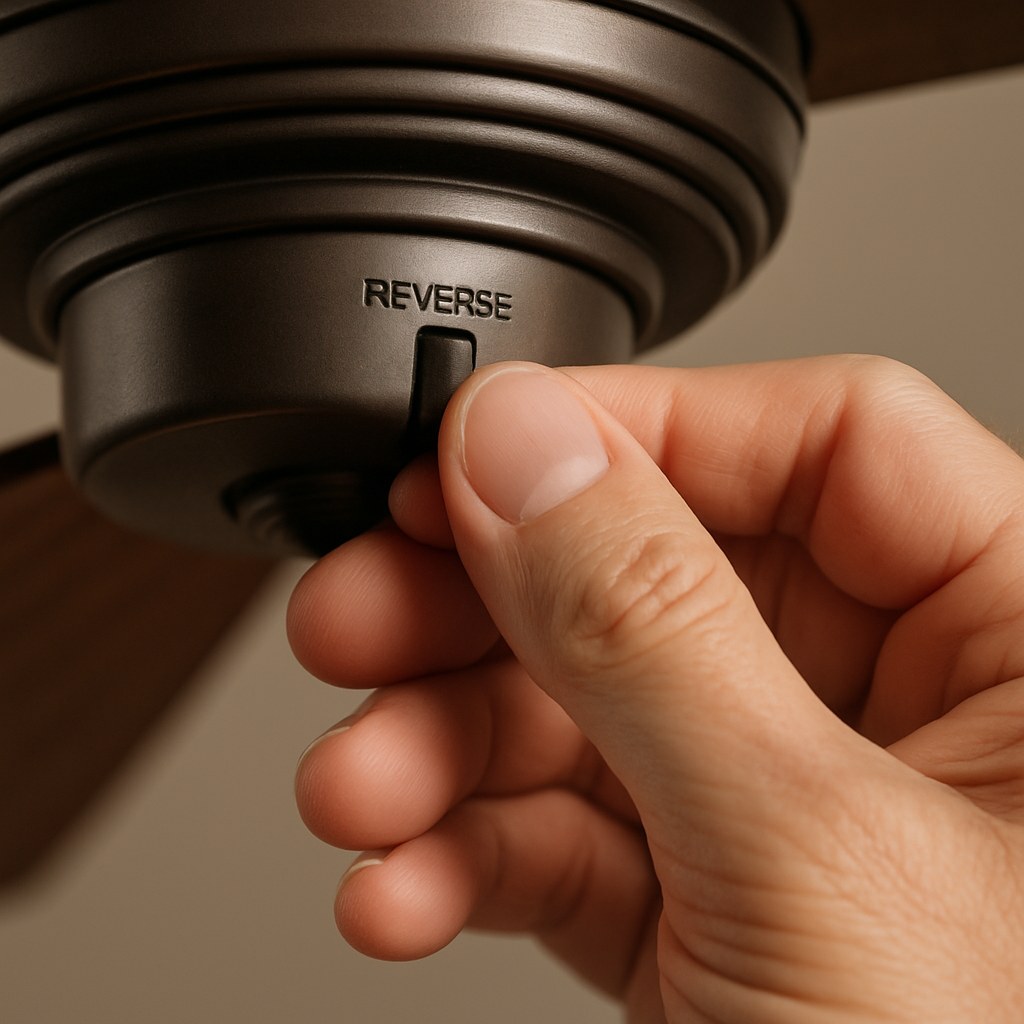
If you don't see a switch on the housing, you might have a dedicated pull chain.
For newer, more modern fans, the process is even simpler.
Wondering if you can reverse your floor fan or box fan? In most cases, the answer is no. Standard portable fans are designed only for direct cooling and do not have a reverse function.
However, some specific types, like twin-window fans, are designed to be reversible. They often have an "intake" and "exhaust" setting, allowing you to either pull cool, fresh air into a room or push stale, hot air out. To change their direction, look for a dedicated switch, knob, or button on the fan's housing. Always unplug the fan before making any adjustments.
If you've followed the steps and your fan's direction hasn't changed, here are a few things to try:
If you’ve tried everything and it still won't work, or if you’re not comfortable getting on a ladder, it might be time to call a professional. A handyman can typically handle this task quickly and affordably, with service calls often ranging from $75 to $150.

Changing your ceiling fan's direction is a small task that makes a big difference. It's a quick, easy, and free way to enhance your comfort and lower your energy consumption season after season. Now that you know how, you can make it a regular part of your seasonal home maintenance routine.
For more easy-to-follow home maintenance guides, expert tips, and quick access to trusted professionals when you need them, download the Casa app. Take control of your home maintenance and start saving time and money today